Businesses across India are rethinking how they verify users. Missed SMS deliveries, message delays, and network blocks have made traditional text-based OTPs less dependable. For companies that need instant, trustworthy authentication, like banks, fintechs, or digital platforms, Voice OTP Service is quickly becoming the smarter alternative.
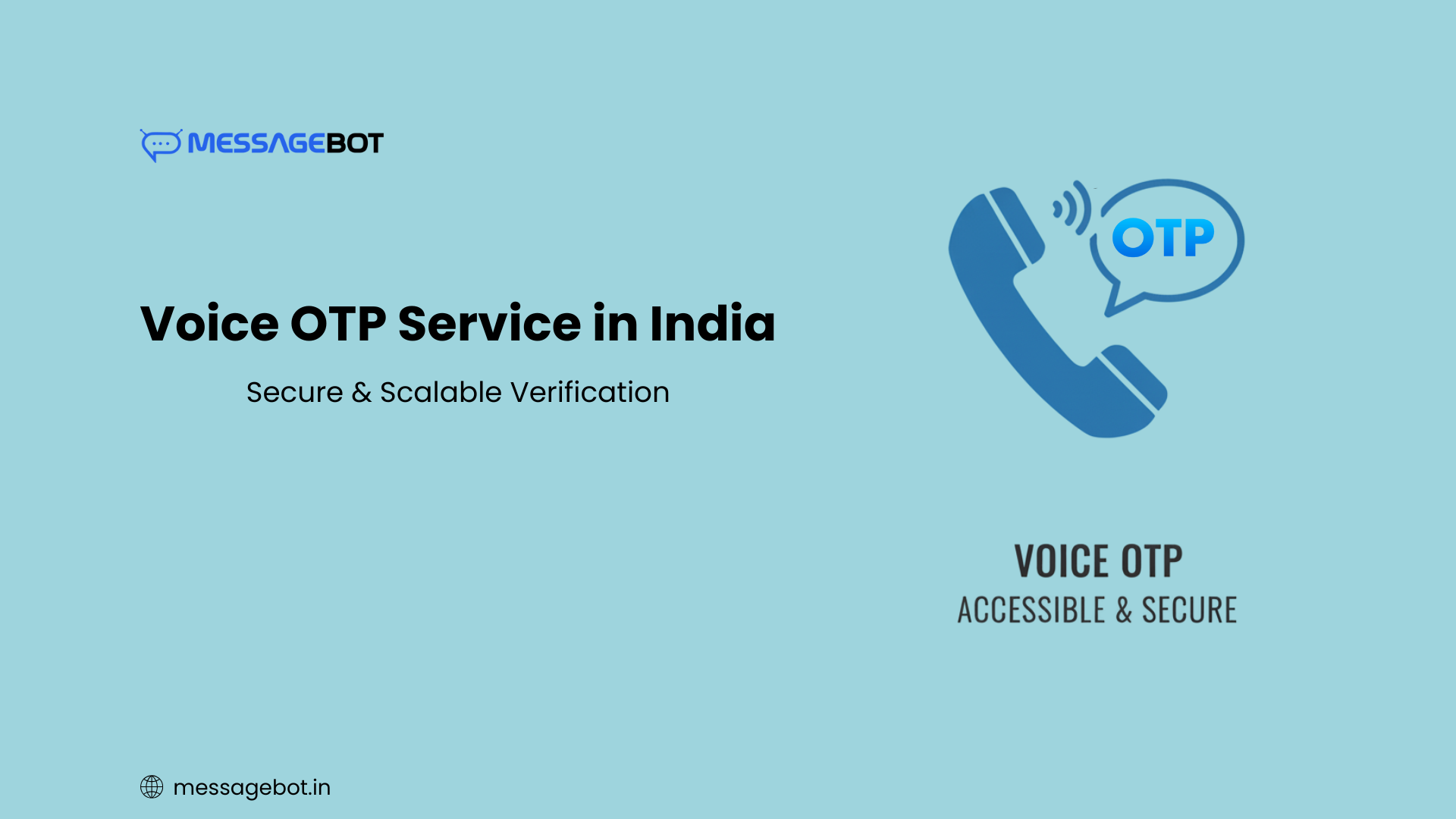 Unlike SMS, Voice OTPs don’t rely on text gateways that can get delayed or filtered. Instead, a system-initiated call delivers a unique verification code directly to the user’s phone. The result? Faster delivery, higher success rates, and a seamless verification experience even in areas with weak SMS coverage.
What Is a Voice OTP Service and How It Works
The Voice OTP Service provides an automatically generated call to users with a one-time password, instead of an SMS. In this system, when the receiving party answers, the IVR speaks out the OTP in real time. This process is very simple, quick, and guarantees message delivery even when text messages fail.
In the background, your platform connects to a Voice OTP API that automatically triggers calls and delivers voice messages through DLT-compliant telecom routes. Each OTP is generated dynamically and expires after one use, ensuring robust security for authentication flows.
For instance, when a user tries to log in to a banking app, the app sends an API request to the Voice OTP gateway. The user receives a call within seconds where the verification code is clearly announced, thereby bypassing delays that often plague SMS routes.
Why Indian Businesses Are Shifting to Voice OTPs
Reliability has become a critical factor for digital verification in India. With users expecting real-time authentication, businesses can’t afford failed deliveries or timeouts. Here’s why Voice OTPs are winning attention across industries:
1. High Delivery Rates
Voice calls face fewer network restrictions than SMS messages. Where promotional or transactional SMS may be delayed due to DLT filters or traffic congestion, Voice OTP calls connect almost instantly.
2. DLT-Compliant Authentication
All telecom operators in India require message traffic to comply with DLT (Distributed Ledger Technology) regulations. A DLT-registered Voice OTP route ensures your messages are authenticated and compliant — reducing risks of blocking or filtering.
Related: DLT Registration in India: Step-by-Step Guide for Bulk SMS Users
3. Works Even Without Internet or SMS Delivery
Voice OTPs are ideal for users in areas with limited mobile data or SMS coverage. As long as the user can receive a phone call, the OTP reaches them — making it an inclusive solution for rural and remote regions.
4. Better User Experience
Users don’t have to wait for a text or manually refresh their inbox. A phone call announcing the OTP feels more immediate and reliable, especially for time-sensitive actions like payment verification.
5. Multi-Language Support
Businesses can customize the voice message in regional languages, improving accessibility and trust. This is particularly useful for BFSI, government, and eCommerce sectors serving diverse audiences across India.
Voice OTP vs SMS OTP: Key Differences
While both serve the same purpose — delivering one-time passwords — they differ in speed, reliability, and compliance.
| Feature | SMS OTP | Voice OTP |
| Delivery Method | Text Message | Automated Call |
| Average Delivery Time | 5–15 seconds (may delay) | 2–5 seconds |
| Delivery Success Rate | 85–90% | 98–99% |
| DLT Compliance | Required | Required |
| Dependence on SMS Gateway | High | None |
| Language Flexibility | Limited | Multiple Languages |
| Best Use Case | General authentication | High-security or high-failure-rate scenarios |
SMS OTPs remain effective but struggle when delivery failures occur. Voice OTPs bridge that gap, ensuring users always receive their verification code, no matter the network condition.
Also read: Transactional vs Promotional SMS: Key Differences, Use Cases & Compliance
DLT and Compliance in Voice OTP Delivery
Voice OTP Services in India must operate within the DLT framework, ensuring transparency and authenticity in telecom communications. When you register your headers and templates under DLT, your Voice OTP traffic gains verified status, minimizing the chance of regulatory issues or message blocking.
DLT compliance doesn’t just help you follow the law — it improves deliverability. Registered templates are recognized by telecom networks, meaning your OTP calls are prioritized over unregistered or gray routes.
If you’re integrating via API, ensure your provider offers DLT-verified Voice OTP routing to stay compliant and maintain high delivery success.
Real-World Use Cases of Voice OTP Services
Voice OTPs have found strong adoption across industries where real-time authentication directly impacts customer experience and security.
1. Banking & Fintech
Banks and wallet providers use Voice OTPs to verify large transactions, password resets, and new device logins. This adds an extra layer of security when SMS routes are unreliable.
2. eCommerce & Retail
Voice OTPs ensure order confirmation and quick sign-ins during festive rushes when SMS delivery often lags.
3. Government Portals
Government and public service apps increasingly use Voice OTP to ensure citizens receive authentication codes promptly, even in low-connectivity areas.
4. Healthcare & Insurance
Patient and policyholder verifications can’t afford delay. Voice OTP ensures instant communication during registrations or sensitive data access.
5. EdTech & Online Exams
For platforms conducting remote assessments, Voice OTP authentication reduces fraud and ensures only authorized users access exams.
Integrating Voice OTP API with Your Platform
Integrating a Voice OTP API is straightforward for developers familiar with RESTful APIs. Most Voice OTP Service providers offer endpoints for triggering automated calls with parameters such as:
- Recipient number
- OTP message or template ID
- Language
- Expiry duration
A single API request can initiate thousands of automated calls per minute, ensuring bulk scalability.
For developers: Bulk SMS API Integration in India: Build Fast & DLT-Compliant Systems
When choosing a provider, prioritize:
- Uptime reliability (99.9%)
- DLT compliance
- Data encryption
- Regional language support
- Detailed analytics and call logs
These factors ensure your Voice OTP integration remains fast, compliant, and future-proof.
Voice OTP for Better Conversion and Security
While SMS OTP remains the most common verification method, data shows that businesses using Voice OTPs see up to 25–30% higher success rates in user verification. That improvement directly impacts login conversions, transaction success, and customer satisfaction.
Additionally, Voice OTPs are harder to intercept, reducing the risks associated with SIM swaps or SMS spoofing. Because OTPs are read aloud in real time, they minimize exposure to phishing or automated attacks that target text messages.
In short — every missed OTP is a missed opportunity. Voice verification ensures your business doesn’t lose users because of something as trivial as a failed SMS.
Challenges and Best Practices
While Voice OTPs offer reliability and speed, implementing them effectively requires planning. Here are a few best practices:
- Keep OTP messages short and clear. Users should hear and remember the code easily.
- Offer language options. Use local dialects when reaching regional audiences.
- Avoid multiple retries. Too many failed calls can trigger telecom spam filters.
- Combine SMS and Voice OTPs. For maximum reliability, use fallback routing — if SMS fails, send a Voice OTP automatically.
- Ensure consent and privacy. Always inform users that they’ll receive a call for verification.
By balancing technical precision with user experience, businesses can deploy Voice OTPs that enhance trust without adding complexity.
The Future of Voice OTP in India
As India’s digital economy grows, more transactions, logins, and verifications happen every second. Telecom and regulatory bodies continue to strengthen DLT and KYC norms, meaning authenticated communication channels like Voice OTP will remain essential.
With AI-powered voice routing and multi-language support, future OTP systems could become even smarter — automatically detecting failed SMS deliveries and triggering a voice call fall-back within seconds.
In short, Voice OTP isn’t replacing SMS — it’s reinforcing it. Together, they form a complete verification ecosystem for India’s rapidly growing digital user base.
Many businesses also pair this with a WhatsApp OTP Service in India to reach users across multiple channels.
Final Thoughts
Choosing the right Voice OTP Service provider can define how smoothly your users experience verification. Whether you’re a fintech startup, a large enterprise, or an online marketplace, instant verification builds trust — and trust drives conversions.
By implementing a DLT-compliant Voice OTP API, businesses in India can achieve higher authentication success rates, minimize fraud, and deliver a more reliable user journey
Looking to enable instant phone-based verification?
Explore MessageBot’s Voice OTP Service in India to add fast, DLT-verified, and high-delivery-rate authentication to your platform.