Walk into any modern Indian business today, whether it’s a local delivery startup or a major insurance company and you’ll hear one phrase repeatedly: “Customer communication has to be consistent.”
It’s not just about sending an SMS or replying on WhatsApp anymore. People expect brands to respond instantly, on whichever platform they choose be it text, call, WhatsApp, email, or even voice bot. This need for unified, seamless communication is what gave rise to omnichannel messaging, a model where all customer interactions stay connected under one roof.
 For Indian businesses that operate across multiple languages, regions, and time zones, this is no longer optional. It’s the new baseline for customer trust and engagement in 2026.
What Exactly Is Omnichannel Messaging?
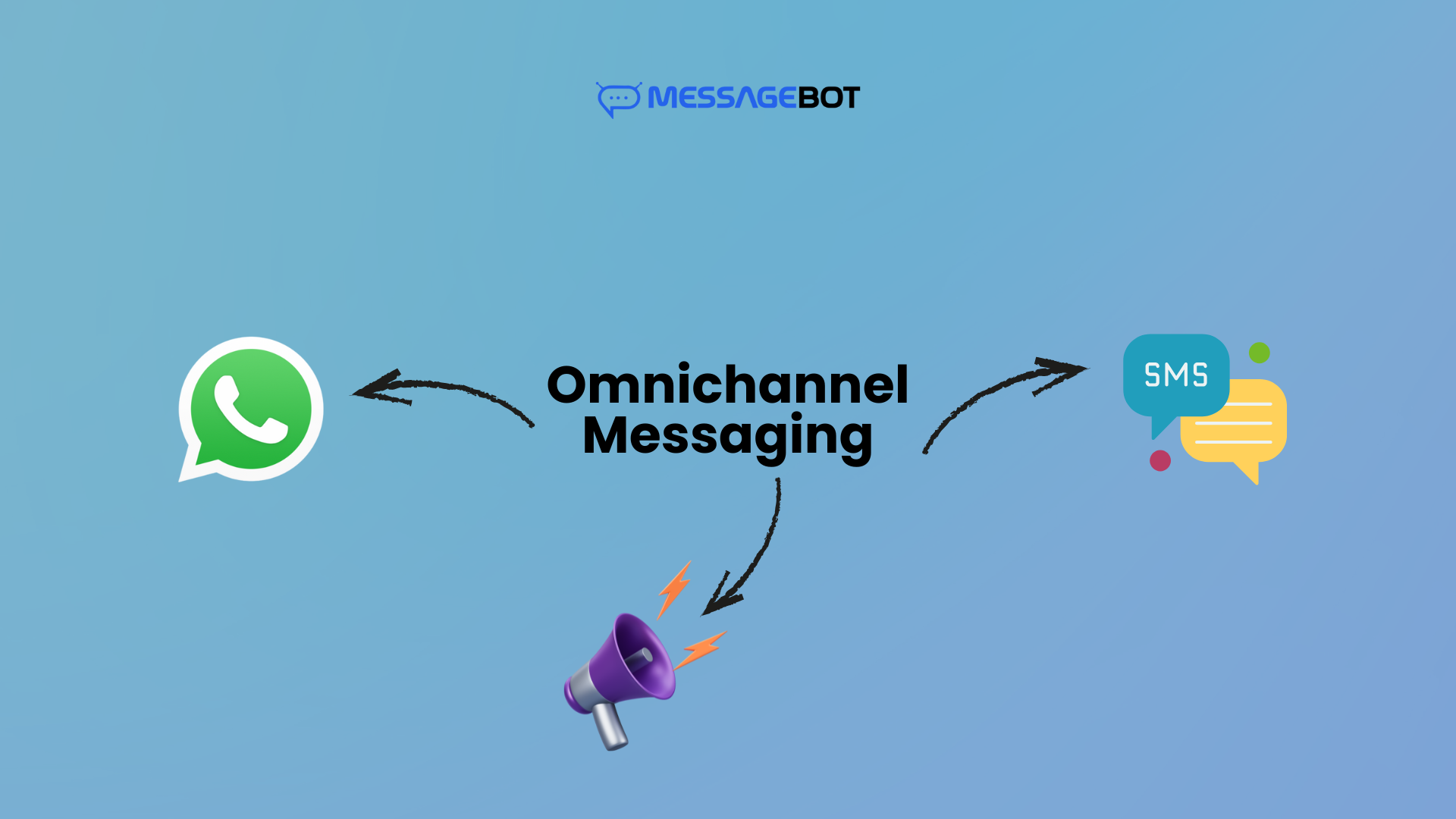
Omnichannel messaging is the practice of using multiple communication channels — such as SMS, WhatsApp, Voice, and Email — in a way that they all work together instead of in isolation.
Imagine a customer receiving an order update via SMS, confirming delivery on WhatsApp, and later getting a feedback call through an automated voice system — all synchronized. That’s the core of omnichannel messaging: continuity and personalization at scale.
It is different from multichannel messaging, where each channel is on its own. In the case of omnichannel communication, context is remembered within the system. When a user starts their conversation on WhatsApp and then call the support, your CRM still knows who they are, what they ordered, and what was discussed.
Why Omnichannel Messaging Matters in India
That’s why Indian businesses especially those in e-commerce, fintech, healthcare, and logistics are shifting towards integrated platforms that blend all three:
- Bulk SMS Service in India for reliable text notifications
- Voice Call API India for voice-based alerts and OTPs
- WhatsApp OTP Service for rich, interactive verification messages
Together, these tools create a consistent experience where customers never feel disconnected, no matter which channel they use.
The Core Channels That Power Omnichannel Messaging
1. SMS – The Evergreen Channel
SMS remains India’s backbone for instant alerts. It’s DLT-verified, reliable even in low-signal areas, and ideal for transactional messages such as OTPs, booking confirmations, or payment reminders.
2. WhatsApp – The Conversational Layer
Over 500 million Indians actively use WhatsApp. With verified business accounts, template messages, and CTA buttons, brands now use it for customer support, marketing, and authentication. WhatsApp bridges the gap between chat and service in a human-like way.
To learn how WhatsApp enhances secure verification, check out our post on WhatsApp OTP Service in India
3. Voice – The Personal Touch
Voice calls, whether automated or interactive, bring emotion and clarity that text sometimes misses. For critical alerts like bank transactions or delivery updates, a call ensures attention. Voice APIs make it easy for systems to generate these calls in real time. When combined, these channels form a mesh that adapts to user behavior — text when needed, call when urgent, chat when convenient.
For more on how businesses use voice verification effectively, explore our detailed guide on Voice OTP Service in India
How It Works: Real Example from an Indian Business
Take a mid-sized fintech startup based in Pune. Earlier, they relied solely on SMS for OTPs. But as users started shifting to WhatsApp and mobile networks became inconsistent, delivery success dropped by nearly 15%.
The company switched to an omnichannel model. Now, OTPs are first attempted through WhatsApp. If undelivered within seconds, the system triggers a fallback SMS. For critical verifications, it also initiates a voice call.
This automation not only improved delivery rates but also boosted customer confidence — no more waiting for an OTP that never arrives. That’s the power of connected communication.
Key Benefits for Businesses
1. Consistency Across Platforms
A unified communication API ensures the same tone, branding, and accuracy on all channels.
2. Improved Delivery and Engagement
Fallback logic — SMS to WhatsApp to Voice — reduces message failure rates dramatically.
3. Smarter Analytics
Centralized dashboards show open rates, response times, and engagement patterns. Businesses can fine-tune campaigns based on real customer data.
4. Compliance and Security
Every message, whether SMS or WhatsApp, follows DLT and TRAI guidelines. Encryption keeps sensitive information, like OTPs or order details, fully secure.
5. Better Customer Experience
People don’t need to repeat themselves across platforms. When systems remember the conversation, customer satisfaction naturally goes up.
Industry Use Cases
Banking and Fintech
Banks use omnichannel systems for secure alerts and verification. Customers may receive loan updates on SMS, reminders on WhatsApp, and follow-ups via voice.
Healthcare
Hospitals use automated WhatsApp confirmations and voice reminders for appointments.
E-commerce
Retailers integrate messaging into order management. One platform handles order confirmation (SMS), shipment tracking (WhatsApp), and feedback (voice).
Education and Coaching
Institutes send fee reminders and attendance alerts via SMS, while using WhatsApp for report cards and voice for announcements.
Logistics
Delivery companies combine SMS + voice to ensure riders reach customers faster and reduce failed deliveries.
DLT, Compliance, and Trust
Omnichannel messaging in India must operate under TRAI’s DLT Registration framework. Each sender ID, header, and template must be pre-approved to ensure authenticity.
When platforms manage compliance centrally, it saves huge administrative effort. Businesses no longer need to maintain separate DLT connections for SMS, WhatsApp, and voice. Everything stays verified and logged, building customer trust.
The Future: Unified APIs and Intelligent Routing
As 2026 unfolds, more Indian companies are investing in unified communication APIs — single gateways that can send an SMS, initiate a WhatsApp message, or trigger a voice call, depending on user context.
With smarter routing and analytics, systems will soon predict the best channel for each customer automatically. For example, if a user usually replies faster on WhatsApp, future campaigns can prioritize that channel.
For developers building such systems, check our guide on Bulk SMS API Integration in India — covering DLT-compliant API design and automation best practices.
We’re also seeing the early rise of RCS (Rich Communication Services) — an upgraded form of SMS which will further merge chat and media features into mobile messaging.
Choosing the Right Omnichannel Partner
When selecting a platform, look for these traits:
- Proven uptime and delivery rate across all channels
- Ready APIs for SMS, WhatsApp, and Voice
- DLT compliance and template management
- Real-time reports with fallback automation
- Local support for regional templates and languages
One of the key things that Indian companies appreciate today is reliability — not just in uptime, but in human support when something goes wrong.
Final Thoughts
Communication in India has evolved beyond individual channels. Customers now expect a connected, familiar voice — whether it’s through a message, a chat, or a call. By adopting omnichannel messaging, businesses don’t just send information — they build relationships that move across platforms effortlessly.
The companies leading this shift are the ones that combine Bulk SMS, Voice API, and WhatsApp OTP Services into one intelligent ecosystem. Omnichannel isn’t a buzzword anymore. It’s how Indian brands are quietly redefining customer trust — one conversation at a time and MessageBot is helping them get there.