Pick up your phone and think about the last time you heard an automated call — maybe a delivery update, payment reminder, or OTP verification. Behind that voice wasn’t a human operator — it was a Programmable Voice API doing the heavy lifting.
In India, where customer communication is both volume-heavy and time-sensitive, businesses are rapidly adopting programmable voice API solutions to replace manual calling systems. Whether it’s a fintech verifying users or an e-commerce brand confirming deliveries, automation has become the norm.
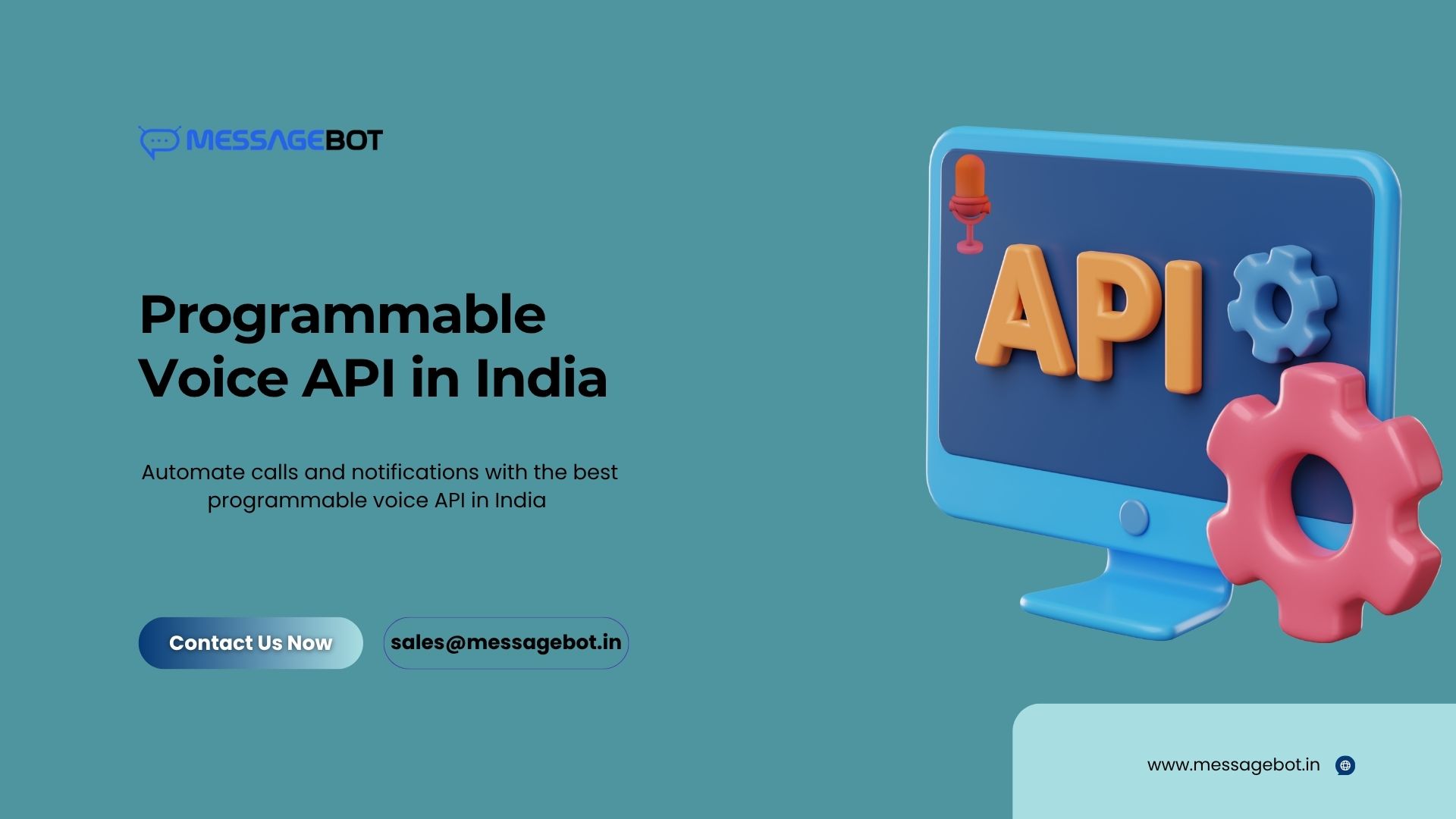 In this guide, we’ll explore what a Programmable Voice API in India is, how it works, and why it’s transforming enterprise communication in 2026.
What Is a Programmable Voice API?
A Programmable Voice API in India lets businesses make, receive, and manage voice calls automatically through software — no hardware or manual dialing needed.
In simple words, it’s an API that turns your software into a virtual call center.
Developers can use it to:
- Trigger automated voice calls.
- Play dynamic messages or IVR menus.
- Capture customer inputs via keypad or speech.
- Record, track, and analyze calls in real time.
Think of it as the evolution of cloud telephony — smarter, faster, and easier to integrate.
Why Indian Businesses Are Adopting Voice APIs in 2026
India’s market has unique challenges: diverse languages, low internet penetration in rural areas, and a massive mobile user base. That’s why voice-based communication continues to dominate.
Here’s why programmable voice APIs are booming in India:
- Language flexibility: Support for multiple Indian languages and dialects.
- No manual calling: Automate thousands of calls daily with one API setup.
- Cost-efficient: No need for call centers or expensive infrastructure.
- Scalable: Handle growing call volumes easily with cloud infrastructure.
- DLT-compliant: Routes are registered and fully compliant with TRAI guidelines.
This makes programmable voice technology the perfect fit for India’s communication ecosystem — fast, compliant, and customer-friendly.
How Programmable Voice API Works
Here’s how a programmable voice API in India automates calls and captures user input seamlessly.
Let’s say your e-commerce app wants to confirm a delivery:
- User places an order → your system triggers the Voice API.
- API makes an automated call to the customer.
- Dynamic message plays:
“Hello [Name], your order will be delivered today. Press 1 to confirm or 2 to reschedule.” - Customer input is captured, and the response is sent back to your system instantly.
This flow can be customized for alerts, OTPs, feedback calls, surveys, or missed-call callbacks — all powered by programmable APIs.
Key Features of a Good Voice API
A robust Programmable Voice API in India offers far more than just call automation. Here’s what sets MessageBot apart:
| Feature | Benefit |
| Text-to-Speech (TTS) | Speak messages in any Indian language dynamically. |
| IVR Menus | Create interactive call flows with button inputs. |
| Call Recording | Store and analyze customer conversations securely. |
| Webhook Support | Get real-time updates on call status and responses. |
| Custom Caller IDs | Display verified business numbers for trust. |
| Multi-network Coverage | Ensure call delivery across all Indian operators. |
When evaluating any programmable voice API in India, ensure it includes Text-to-Speech, IVR flows, and webhook support. With MessageBot’s Voice API, developers can program workflows in just a few lines of code — making it ideal for both startups and enterprises.
Top Use Cases of Programmable Voice API in India
Voice APIs are transforming how Indian companies connect with customers. Here are some real-world applications:
1. Voice OTPs & Authentication
Automate time-sensitive verifications using voice-based OTP delivery — perfect when SMS or WhatsApp fails.
Related read: Voice OTP Service in India
2. Delivery & Transaction Updates
Trigger automated calls for delivery confirmations, payment reminders, or order tracking — with dynamic speech responses.
3. Missed Call & Callback Automation
Combine it with missed call verification for a seamless two-way flow.
Read: Missed Call Verification in India
4. Feedback & Surveys
Collect real-time customer opinions via interactive voice menus (press 1–5 ratings).
5. IVR Support Systems
Build 24/7 self-service support using programmable voice call APIs integrated with your CRM.
How Developers Integrate a Voice API (Step-by-Step)
Here’s a simplified flow to integrate the Programmable Voice API using MessageBot’s platform.
- Generate an API key from your MessageBot dashboard.
- Create a voice template (Text-to-Speech or pre-recorded audio).
- Send POST request to initiate the call:{ “to”: “+919876543210”, “audio”: “https://yourserver.com/audio/confirm_delivery.mp3”,
“caller_id”: “MessageBot”,
“callback_url”: “https://yourapp.com/webhook”
}
- Receive webhook response with call status and duration.
- Log call reports in your CRM or database for analytics.
Integration takes less than 15 minutes — and scales effortlessly with your traffic.
Also read: Bulk SMS API Integration in India
Voice API vs Traditional IVR Systems
| Feature | Traditional IVR | Programmable Voice API |
| Setup | Manual hardware | Cloud-based, quick setup |
| Scalability | Limited | Infinite (cloud auto-scale) |
| Cost | High maintenance | Pay-per-use |
| Language | Fixed voice prompts | Dynamic text-to-speech |
| Integration | Complex | Simple REST API |
In short, Programmable Voice API in India replaces old IVR systems with intelligent automation that adapts to your needs in real time.
Why MessageBot’s Voice API Stands Out
MessageBot’s Programmable Voice API in India is designed for businesses that need scalability, compliance, and speed.
Built for India
Optimized for Indian networks, regional languages, and DLT frameworks.
Developer-Friendly
Comes with documentation, sample code, and SDKs for quick setup.
Omnichannel Ready
Integrates seamlessly with SMS, WhatsApp, and Missed Call APIs.
Learn more: Omnichannel Messaging in India
Reliable Delivery
99.9% uptime and intelligent call routing ensure your messages always reach customers.
Secure & Compliant
TRAI-compliant routes with encrypted data handling for voice and user info.
Best Practices for Using Voice APIs in India
- Use dynamic messages personalized with customer names.
- Offer regional language options for better engagement.
- Log call analytics to measure success rates.
- Combine voice with WhatsApp or SMS for backup delivery.
- Respect privacy — follow TRAI and DND regulations strictly.
Also explore: Smart WhatsApp OTP API Integration India Guide
Future of Programmable Voice in India
Voice is evolving fast — from simple TTS systems to AI-powered conversational calls.
In 2026 and beyond, Indian businesses will rely on voice APIs for:
- Smart IVR bots with natural language understanding.
- AI call analytics and intent recognition.
- Integration with CRM, payment gateways, and customer engagement tools.
As the line between automation and human interaction blurs, programmable voice APIs will become the foundation of AI-driven communication.
Final Thoughts
Voice is personal. It builds trust, communicates emotion, and reaches every corner of India — even where internet or smartphones can’t.
That’s why Programmable Voice API in India isn’t just a tool — it’s the future of business communication.
If you want to automate calls, send real-time voice alerts, or create IVR systems that speak your customer’s language — MessageBot’s Voice API has you covered
Automate Your Business Calls with MessageBot
Power your customer engagement with MessageBot’s Programmable Voice API. Automate calls, alerts, and IVR systems — fast, secure, and scalable across India