In 2026, SMS remains India’s most dependable communication channel, cutting across industries and customer segments. Whether it’s an OTP from a banking app, a delivery update from an eCommerce store, or a Diwali sale message from a retailer, SMS continues to drive engagement where other channels fail.
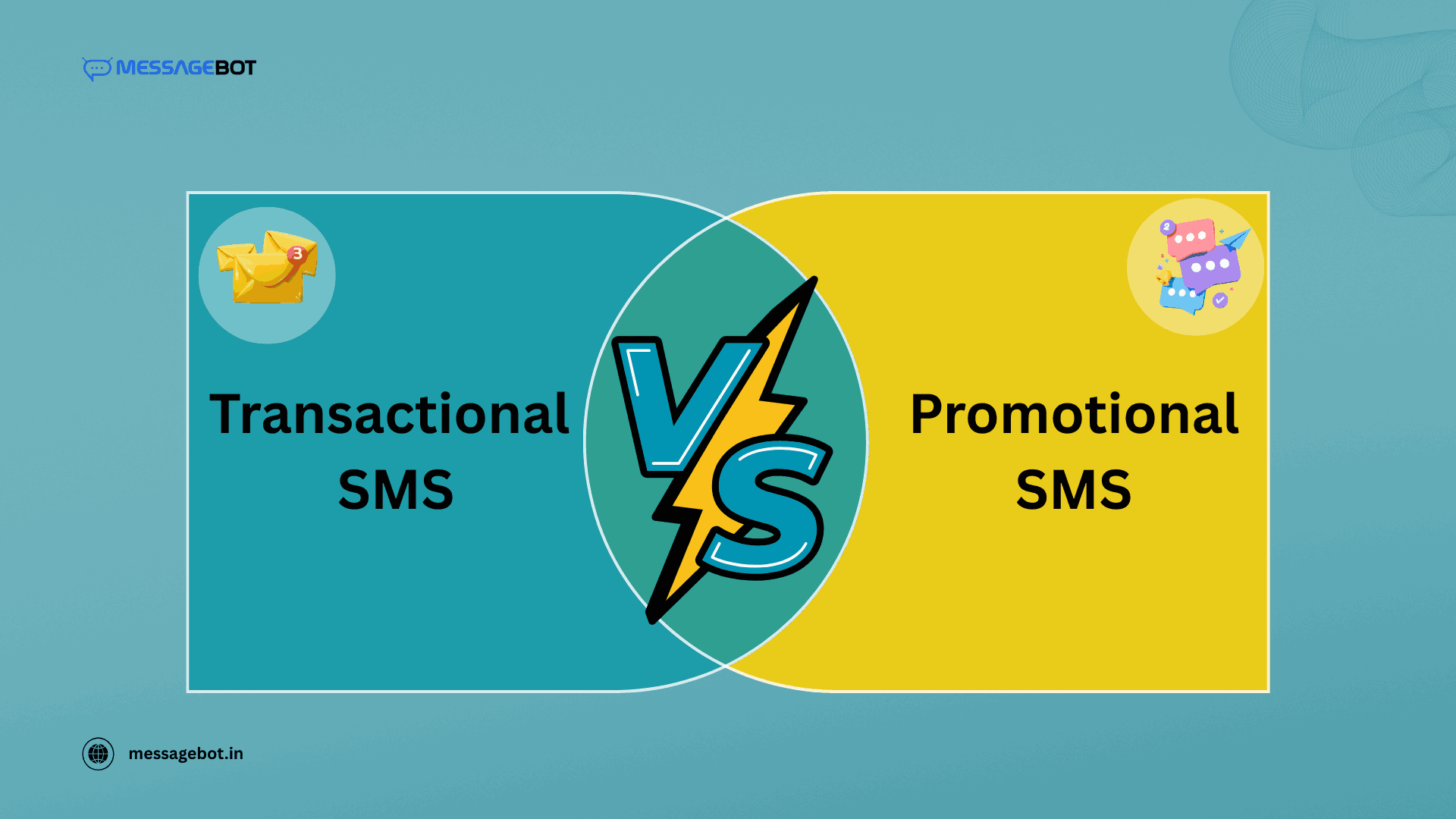
But as simple as it looks, not all SMS routes are the same. To stay compliant, maintain high delivery rates, and protect your brand reputation, you must understand the difference between Transactional and Promotional SMS.
This guide breaks it down — how each works, their ideal use cases, DLT compliance rules, and how businesses can automate both through a single messaging system.
Understanding SMS Route Types in India
Under TRAI (Telecom Regulatory Authority of India), every message you send must go through one of two registered routes:
- Transactional SMS — for critical or service-based alerts.
- Promotional SMS — for marketing or advertising messages.
This classification was introduced to reduce spam and improve transparency in business messaging.
Choosing the wrong route can lead to:
- Message rejections on DLT platforms.
- Delays in delivery.
- Potential penalties for non-compliance.
So before you hit “send”, you must know what each type stands for.
What Is a Transactional SMS?
A Transactional SMS is designed for important, time-sensitive communication between a business and its verified customers. Think of it as your information-only route — fast, reliable, and unrestricted.
Common Examples
- OTPs and login verifications
- Payment and order confirmations
- Appointment or service reminders
- System-generated alerts
- Delivery notifications
These messages are essential to user experience — they confirm actions, provide updates, or deliver critical information in real time.
Key Features of Transactional SMS
- 24×7 Delivery: Sent instantly, any time of day or night.
- DND Bypass: Even users registered on DND lists receive them.
- High Delivery Priority: Routed via high-speed networks for faster delivery.
- Alphabetic Sender ID: Usually 6 letters, representing brand or service (e.g., VM-ALERTS).
- Strict Template Approval: All message templates must be approved on DLT.
Example:
“Your OTP for transaction ₹2,500 is 472915. Valid for 5 minutes – XYZ Bank.”
Such a message doesn’t promote a product — it delivers critical information, so it qualifies as Transactional.
Explore Transactional SMS Solutions
What Is Promotional SMS?
Promotional SMS is used for marketing and sales outreach.
It’s your brand’s loudspeaker — designed to attract, inform, and convert potential customers.
Common Examples
- New product launches or discounts
- Event invitations or festive offers
- Lead generation campaigns
- Brand awareness drives
These messages can only be delivered between 9 AM and 9 PM, and they cannot be sent to numbers registered under DND.
Key Features of Promotional SMS
- Timed Delivery: Sent during TRAI-approved business hours.
- DND Restricted: Delivered only to non-DND numbers.
- Economical: Lower cost per message for mass marketing.
- Numeric or Brand Sender ID: Used after DLT approval.
- Customizable Content: Flexible templates for marketing creativity.
Example:
“Flash Sale! Get 25% off on all fashion items till midnight. Shop now: www.store.in”
Promotional SMS is the heartbeat of Bulk SMS Marketing.
Transactional vs Promotional SMS: In-Depth Comparison
| Feature | Transactional SMS | Promotional SMS |
|---|---|---|
| Purpose | Alerts, OTPs, Updates | Marketing, Advertising |
| Delivery Window | 24×7 | 9 AM – 9 PM |
| DND Access | Allowed | Restricted |
| Speed | High Priority | Normal |
| Sender ID | Alphabetic (e.g., VM-BANKTX) | Numeric or Brand Header |
| Cost | Slightly higher | Lower (per message) |
| DLT Requirement | Mandatory | Mandatory |
| Best For | Banks, Fintech, eCommerce, Healthcare | Retail, Events, Education, Hospitality |
| User Intent | Service-driven | Engagement-driven |
In summary:
- Transactional SMS = Trust + Reliability
- Promotional SMS = Reach + Visibility
TRAI & DLT Compliance: What Businesses Must Know in 2026
In India, DLT registration is mandatory for any entity that sends commercial SMS. The DLT (Distributed Ledger Technology) framework, introduced by TRAI, helps trace every message to its source to prevent spam.
To Send Any SMS Legally, You Must:
- Register your business entity on a DLT portal.
- Get sender ID (header) approval — different for each route.
- Register message templates for both transactional and promotional types.
- Use only approved templates for every message sent.
Common DLT Rejection Reasons
- Template mismatch
- Unregistered sender ID
- Promotional content sent via transactional route
- Invalid variable format
To stay compliant, check this full guide: DLT Registration in India Step-by-Step
Choosing the Right SMS Route for Your Business
Choosing the right route depends on your business type, communication frequency, and user intent.
| Scenario | Recommended Route |
| OTP or verification message | Transactional |
| Promotional offer or festival campaign | Promotional |
| Appointment or booking reminder | Transactional |
| Feedback or referral link | Promotional |
| Payment alert or account update | Transactional |
| Welcome message after signup | Transactional (if informational) |
Pro Tip: Many businesses combine both routes strategically — transactional for trust and promotional for conversion.
How API Integration Simplifies Route Management
Managing routes manually is error-prone. That’s where SMS API integration helps. By connecting your app, CRM, or ERP with a Bulk SMS API, you can:
- Auto-select the right route based on message content.
- Send thousands of messages per second.
- Track delivery reports and performance metrics.
- Ensure 100% DLT compliance with automated template mapping.
APIs help you scale without confusion — whether you send OTPs or marketing alerts, every SMS is automatically sent via the right channel.
Learn how to build this automation: Bulk SMS API Integration in India: Build Fast & DLT-Compliant Systems
Real-World Examples: How Businesses Use Both SMS Types
- Banks: OTPs (Transactional) + Credit card offers (Promotional)
- eCommerce: Order updates (Transactional) + Sale campaigns (Promotional)
- Healthcare: Appointment reminders (Transactional) + Wellness tips (Promotional)
- Education: Exam alerts (Transactional) + Admission campaigns (Promotional)
By mapping both flows correctly, brands maintain high delivery rates while engaging customers ethically and effectively.
Common Mistakes Businesses Make
- Using promotional templates for OTP delivery
- Not updating templates after DLT policy changes
- Sending bulk campaigns during restricted hours
- Overusing the same sender ID across different routes
- Ignoring message analytics (delivery vs. conversion rate)
Avoid these, and your messaging infrastructure becomes both compliant and conversion-focused.
The Future of SMS Messaging in India
TRAI and telecom operators are continuously upgrading India’s messaging ecosystem. In 2026 and beyond, expect:
- Smarter routing based on AI-powered traffic management
- RCS (Rich Communication Services) combining media-rich messages with traditional SMS
- Omnichannel verification systems blending SMS, WhatsApp, and Voice OTP
- Enhanced fraud protection with real-time sender verification
Brands that adapt early to these changes will dominate communication reliability and customer engagement.
Final Thoughts
Both Transactional SMS and Promotional SMS are pillars of India’s digital communication system. Where transactional routes build trust and customer retention, promotional routes drive growth and visibility. The smartest marketers in 2026 don’t choose between them — they integrate both into a compliant, automated communication strategy that delivers results fast.