Bulk SMS Sender IDs play a far bigger role in message delivery than most businesses realise. If you’ve ever wondered why some SMS campaigns deliver instantly while others get delayed, blocked, or silently filtered even after DLT approval, the answer usually lies in one place: the sender ID.
Most businesses treat sender IDs as a checkbox item. Something to register once, paste into the SMS panel, and forget. In reality, sender IDs play a much deeper role in how messages are evaluated by Indian telecom operators.
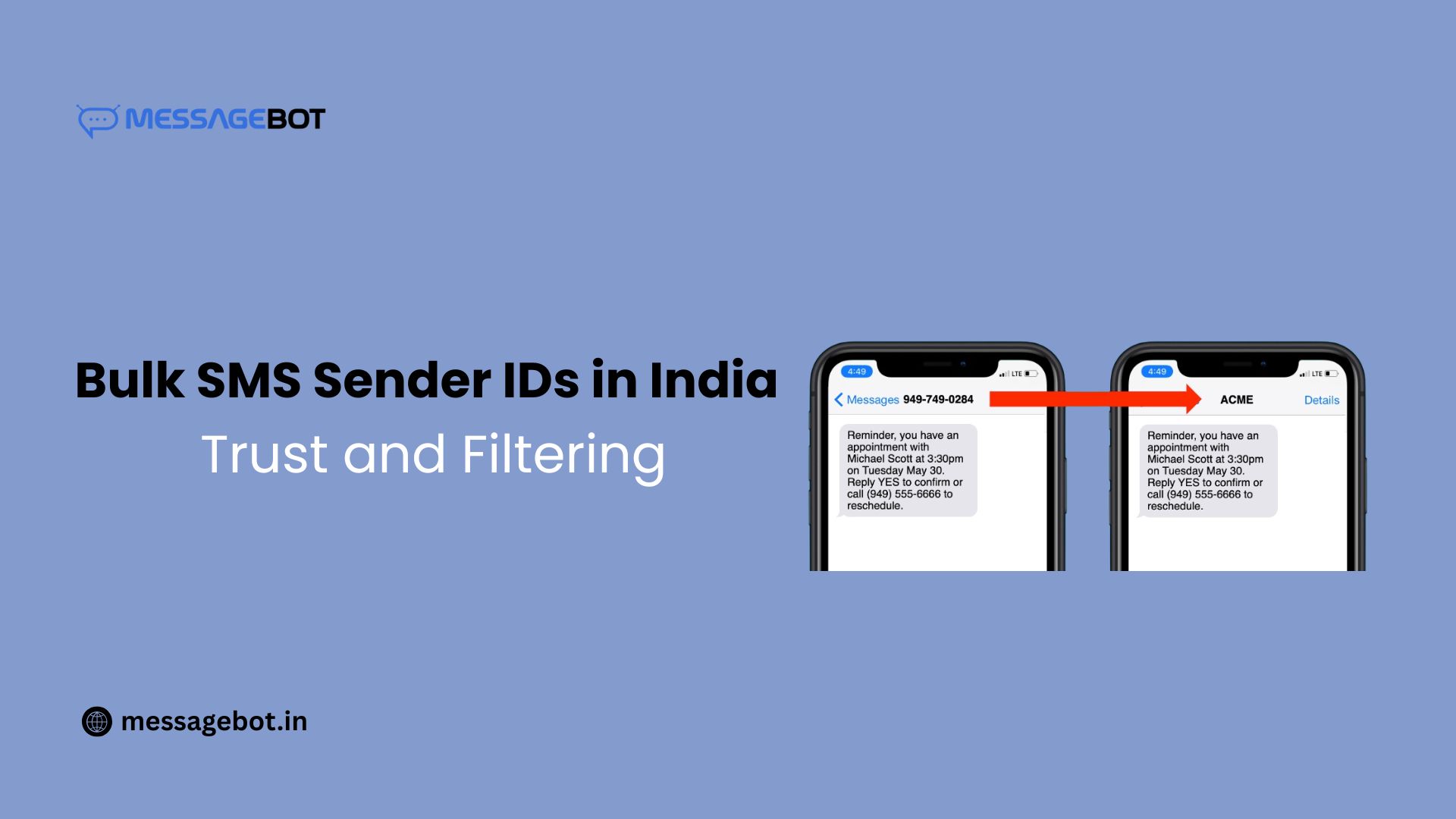 In 2026, operators don’t just recognize sender IDs they track behaviour, build trust scores, and apply filtering rules based on long-term usage. Understanding how this system works is essential for consistent delivery of OTPs, transactional alerts, and critical business communication.
This guide explains Bulk SMS Sender IDs from an operator and network perspective how trust is built, how filtering actually happens, and why branding discipline matters far more than most businesses realize.
Why Sender IDs Matters in India
India’s SMS ecosystem has changed significantly since the introduction of DLT. Operators now focus less on one-time approvals and more on ongoing sender behaviour.
Every SMS sent contributes to a sender’s reputation profile. That profile influences:
- delivery speed
- inbox vs filtered routing
- operator-level throttling
- long-term reliability
This is why two brands sending similar messages can experience very different results — their sender identities are perceived differently by the network.
At the center of this trust system are Bulk SMS Sender IDs, which effectively act as your brand’s identity layer across telecom networks.
What a Sender ID Really Represents
Technically, a sender ID is a 6-character alphanumeric code shown as the “From” name in an SMS. Practically, it represents much more.
To operators, a sender ID signals:
- brand legitimacy
- historical consistency
- message intent alignment
- spam or phishing risk
- likelihood of user complaints
Once approved and activated, a sender ID starts accumulating behavioural history. That history directly affects how aggressively messages are filtered or prioritised.
This is why Bulk SMS Sender IDs should be treated as long-term assets, not temporary campaign labels.
How Telecom Operators Evaluate Sender Trust
While operators don’t publish their scoring models, consistent patterns are visible across networks.
Sender trust is influenced by:
1. Consistency of Use
Using the same sender ID regularly builds recognition. Frequent changes reset trust signals and invite closer scrutiny.
2. Template Alignment
Messages that deviate from approved intent — even subtly — raise red flags.
3. Traffic Discipline
Mixing promotional language into transactional sender IDs is one of the fastest ways to trigger filtering.
4. Volume Behaviour
Sudden spikes from a sender ID with little history often lead to throttling.
5. User Actions
Blocks or spam reports, even in small numbers, can permanently affect sender reputation.
This is why Bulk SMS Sender IDs used for OTPs or banking alerts are evaluated far more strictly than promotional sender identities.
The Biggest Sender ID Mistakes Businesses Keep Making
Across industries, the same errors appear again and again:
Treating sender IDs as campaign names
Rotating sender IDs for every campaign weakens trust and confuses operator filters.
Using one sender ID for everything
OTPs, alerts, and promotions should never originate from the same sender identity. Clear transactional and promotional message separation is critical for stable delivery.
Constantly modifying sender names
Even small tweaks break continuity and reset reputation signals.
Choosing generic IDs
Sender IDs like “INFO” or “UPDATE” are far more likely to be filtered than clearly branded ones.
In 2026, Bulk SMS Sender IDs that clearly reflect a real brand name consistently outperform creative or generic variations
Why DLT Approval Alone Does Not Guarantee Delivery
A common misconception is that once a sender ID is DLT-approved, delivery is assured. That’s not how modern filtering works. DLT verifies authorization, not trust.
Operators still apply real-time checks based on behaviour, velocity, and historical performance. This explains why messages can be approved yet still experience partial delivery or delays.
For businesses unfamiliar with this system, it helps to understand the broader DLT registration requirements, which explain the difference between compliance and actual network acceptance.
This gap between approval and trust is one of the main reasons Bulk SMS Sender IDs must be managed strategically, not casually.
Sender ID Aging: A Concept Most Businesses Miss
Sender IDs age – much like domains or email IPs.
A new sender ID typically goes through three phases:
- Observation phase – traffic is closely monitored
- Stabilisation phase – consistent behaviour improves reliability
- Trusted phase – messages face minimal filtering
Long inactivity, sudden behaviour changes, or frequent edits can push a sender ID back into observation.
This is why enterprises rarely rotate sender identities and instead nurture a small, stable set of Bulk SMS Sender IDs over time.
Branding vs Creativity: What Actually Works
Many marketing teams want sender IDs to be clever or campaign-specific. Operators don’t reward creativity, they reward predictability.
What works best:
- clear brand reference
- readable, short IDs
- alignment with website and DLT entity
- consistent usage across similar messages
What doesn’t work:
- abbreviations users don’t recognise
- rotating campaign codes
- misleading brand references
In filtering systems, clarity always beats creativity.
How Sender IDs Influence Filtering
Filtering is not always triggered by user reports.
Operators also analyse:
- keyword patterns
- URL reputation
- send timing
- sender–template mismatch
- historical delivery behaviour
If a sender ID behaves differently from its established pattern, messages may be delayed or deprioritised automatically without any explicit rejection.
This is often linked to delivery route quality, which explains why identical messages behave differently across operators.
This silent filtering is one of the hardest problems to diagnose and one of the strongest reasons to manage Bulk SMS Sender IDs carefully.
Best Practices Enterprises Follow in 2026
High-reliability senders consistently follow these principles:
- one sender ID per message intent
- separate sender IDs for transactional and promotional traffic
- minimal changes once trust is established
- gradual volume scaling for new sender IDs
- regular audits of template and sender alignment
Most of these practices are implemented through automated SMS workflows, ensuring consistency at scale without manual errors.
These habits aren’t about shortcuts — they’re about earning operator trust over time.
The Future of Sender ID Trust in India
As phishing detection tightens and AI-based filtering increases, sender IDs will matter even more.
In the coming years:
- identity verification will be stricter
- behavioural scoring will be faster
- inconsistent senders will be filtered earlier
In this environment, Bulk SMS Sender IDs won’t just identify who sent the message — they’ll determine whether the message deserves to be delivered at all.
Businesses that treat sender IDs as infrastructure, not metadata, will see far fewer delivery issues in 2026 and beyond.
Final Thoughts
Sender IDs may sit quietly in the background, but they shape everything about SMS delivery speed, trust, visibility, and reliability.
If your messages are delayed or filtered despite compliance, the issue is rarely SMS itself. More often, it’s how the sender identity is being perceived by the network.
Understanding how Bulk SMS Sender IDs really work and managing them with discipline is one of the most effective ways to improve SMS performance in India.
Not through hacks.
Not through shortcuts.
But through trust, consistency, and clarity.
Want Reliable Sender ID Setup & Consistent Delivery?
If you’re setting up sender IDs for OTPs, alerts, or transactional messaging — or facing unexplained filtering despite DLT approval — using a compliant, operator-trusted SMS infrastructure makes a real difference.
Explore our Bulk SMS service for Indian businesses, built with DLT-aligned sender management, stable routing, and enterprise-grade reliability.