WhatsApp

WhatsApp Business API Pricing India (2026): Complete Cost Breakdown

14 min read

Every Indian business exploring WhatsApp automation eventually hits the same wall: the pricing looks simple on the surface, but the actual invoice at the end of the month rarely matches expectations.

The reason isn't that WhatsApp business API pricing is complicated. It's that most guides explain only half of it — Meta's per-message rates — without covering the BSP layer, the category logic, or the decisions that quietly determine whether your monthly spend is ₹5,000 or ₹50,000 for the same message volume.

whatsapp-business-api-pricingThis guide covers all of it: Meta's current rate card, how message categories affect charges, what BSPs add on top, free messaging opportunities most businesses miss, real cost scenarios, and practical ways to keep spend reasonable as you scale.

WhatsApp Business API Pricing in India (2026)

The table below shows Meta's published per-message rates for Indian recipient numbers.

Message Category Rate (INR) When It Applies
Marketing ₹0.8631 per message Promotions, offers, campaigns — always charged
Utility ₹0.115 per message Order updates, reminders, receipts — only outside the 24-hr service window
Utility (inside service window) Free When the customer messaged you first within the last 24 hours
Authentication (domestic) ₹0.115 per message OTPs and login verification to Indian numbers
Authentication International ~₹2.30 per message OTPs sent to non-Indian numbers
Service replies Free All replies within a customer-initiated 24-hour window

Meta's charges only, applied per delivered message. Undelivered messages are not charged. 18% GST applies on top. Rates are based on Meta's published India pricing as of June 2026 and may change in future updates — always verify on Meta's official pricing page before finalising your budget.

Key Takeaways

Marketing messages cost 7.5x more than transactional messages. Misclassifying templates is the single most expensive mistake Indian businesses make on the WhatsApp Business Platform.

The 24-hour service window is free. Replies to customer-initiated conversations cost nothing — no cap since November 2024.

Your bill has two separate layers. Meta's per-message fee (fixed, identical across all BSPs) and your BSP's platform fee (variable, negotiable). Most businesses only compare BSP pricing — yet Meta's charge is the larger component at volume. If you're still evaluating whether the API is right for your business, our WhatsApp Business App vs API breakdown covers the key differences.

Setup is free on Meta's side. Business verification, number registration, and template approval cost nothing from Meta. BSP onboarding fees vary.

DLT registration is not required for WhatsApp. Unlike SMS, the WhatsApp API operates entirely outside TRAI's DLT framework.

What Changed in July 2025 — And Why It Matters

Until July 2025, Meta billed usage by conversation — every 24-hour messaging window counted as one charge, regardless of how many messages were exchanged inside it. That model is gone. From July 1, 2025, Meta moved to per-delivered-template-message pricing. Every template message is now billed individually. A campaign sending 10,000 messages generates 10,000 billable events.

This makes template category selection significantly more consequential. Under conversation billing, category affected the session price. Under per-message pricing, it affects every single charge. Getting classification right before going live is now a material cost decision, not an administrative detail. If you're reading older guides that mention conversation tiers, session pricing, or free conversation thresholds — that model no longer applies.

Understanding the Three Cost Components

Layer 1 — Meta's Per-Message Fee

Non-negotiable and identical regardless of which BSP you use. Whether you're on Wati, AiSensy, Gupshup, MessageBot, or any other official provider — Meta's rate for your message category is the same. No BSP can discount it.

Layer 2 — BSP Platform Fee

What your Business Solution Provider charges for the software layer on top of Meta's Cloud API: the shared inbox, campaign manager, chatbot builder, analytics dashboard, webhook support, and template management. This varies significantly across providers — and it's the one layer you can negotiate.

Most Indian BSPs charge a monthly subscription. Some add a per-message markup on top of Meta's rates. Others pass Meta's rates through at zero markup and charge only a flat fee. Understanding which model your BSP uses before committing is essential — the difference compounds at volume.

Total Cost of Ownership

Real monthly spend = Meta charges + BSP platform fee + 18% GST on both.

Cost Component Typical Range Notes
Meta per-message charges Depends on volume and category mix Fixed rate, same across all BSPs
BSP platform fee ₹1,000–₹10,000+/month Varies by provider and plan
GST 18% on all charges Applies to both Meta and BSP fees
Setup / onboarding ₹0–₹5,000 one-time Varies by BSP; Meta charges nothing
Chatbot automation ₹1,000–₹10,000+/month Separate from API fees; optional

Free Messaging Opportunities Most Businesses Miss

The 24-Hour Service Window

When a customer messages your business first, a 24-hour window opens. Every reply during this window is free — regardless of content. The window resets with each new inbound message, so active support conversations stay free indefinitely. Since November 2024, Meta removed the previous monthly cap. There is no limit on free service interactions.

Utility Templates Inside the Service Window

Utility messages cost ₹0.115 each as business-initiated outbound messages. The same message sent as a reply inside an open service window costs nothing. If your customer has messaged you within the last 24 hours, reply rather than initiate a new template. Same content, zero charge.

Click-to-WhatsApp Entry Point Window

When a user clicks a Click-to-WhatsApp ad on Facebook or Instagram and messages your business, a 72-hour free window opens — extended beyond the standard 24 hours. Follow-up flows within this window carry no per-message cost. You pay for the ad click, not the messages.

WhatsApp Business API Pricing Calculator (India 2026)

Estimate your Meta charges before committing to a plan. All figures exclude GST and BSP fees.

Utility & Authentication — ₹0.115 per message

Monthly Messages Meta Charge With 18% GST
1,000 ₹115 ₹135.70
5,000 ₹575 ₹678.50
10,000 ₹1,150 ₹1,357
25,000 ₹2,875 ₹3,392.50
50,000 ₹5,750 ₹6,785
1,00,000 ₹11,500 ₹13,570

Marketing Messages — ₹0.8631 per message

Monthly Messages Meta Charge With 18% GST
1,000 ₹863.10 ₹1,018.46
5,000 ₹4,315.50 ₹5,092.29
10,000 ₹8,631 ₹10,184.58
25,000 ₹21,577.50 ₹25,461.45
50,000 ₹43,155 ₹50,922.90
1,00,000 ₹86,310 ₹1,01,845.80

Authentication International — ~₹2.30 per message

Monthly Messages Meta Charge With 18% GST
500 ₹1,150 ₹1,357
1,000 ₹2,300 ₹2,714
5,000 ₹11,500 ₹13,570
10,000 ₹23,000 ₹27,140

Add your BSP's monthly platform fee to get total monthly cost. Authentication International rates are approximate and subject to destination-country rules.

Real Monthly Cost Scenarios

These estimates use Meta's current published rates. All figures exclude GST and BSP platform fees.

Example 1 — Early-Stage D2C Brand 3,000 OTPs · 5,000 order updates · 2,000 marketing messages · 1,500 service replies

Meta charges ≈ ₹2,646 + 18% GST + BSP platform fee Mostly transactional, so the bill stays low. The 2,000 marketing messages account for ₹1,726 of the total — over 65% of the Meta charge.

Example 2 — Mid-Size E-Commerce Platform 6,000 OTPs · 12,000 order/delivery updates · 8,000 campaign messages · 3,000 service replies

Meta charges ≈ ₹8,975 + 18% GST + BSP platform fee Campaign volume drives the cost here. The 8,000 marketing messages alone account for ₹6,905 — nearly 77% of total Meta charges. The 18,000 transactional messages combined cost only ₹2,070.

Example 3 — Fintech / NBFC (OTP-Heavy) 50,000 domestic OTPs · 2,000 international OTPs · 10,000 account alerts · 2,000 service replies

Meta charges ≈ ₹11,500 + 18% GST + BSP platform fee High volume but low per-message rate keeps costs manageable. The 2,000 international OTPs at ~₹2.30 each contribute ₹4,600 — almost 40% of the bill despite being just 3% of message volume. International authentication is the cost to watch in fintech.

WhatsApp Business API Use Cases Across Indian Industries

Different sectors use the WhatsApp Business Platform for different workflows — each mapping to a different cost profile.

  • E-commerce / D2C — Order confirmations, delivery updates, COD reminders. Primarily utility messages at ₹0.115/msg; free when sent inside service windows.
  • Fintech / Banking — OTP verification, EMI reminders, account alerts. Authentication and utility at ₹0.115/msg domestic; international OTPs at ~₹2.30/msg.
  • Healthcare — Appointment reminders, lab report delivery, telemedicine links. Utility category throughout — low cost per message.
  • Travel & Logistics — Booking confirmations, shipment tracking, driver communication. Utility-heavy with occasional marketing for offers.
  • EdTech — Course reminders, exam results, fee payment alerts. Utility and service window replies dominate.
  • Retail / Brand Marketing — Product launches, seasonal campaigns, personalised offers. Marketing category at ₹0.8631/msg — budget carefully at volume.
  • Customer Support (all sectors) — FAQ resolution, issue tracking, agent handover. Service window replies are free with no cap.

The pattern is consistent: transactional and support use cases carry the lowest charges. Outbound marketing is viable but expensive at high volume without clear ROI attribution. For businesses running WhatsApp alongside SMS and Voice — particularly for OTP fallback — the case for omnichannel messaging becomes stronger as message volumes grow.

Common Pricing Mistakes Indian Businesses Make

Misclassifying utility messages as marketing. Order confirmations, delivery updates, payment receipts, and appointment reminders are utility templates at ₹0.115 each. Filed incorrectly as marketing, they cost ₹0.8631. At 10,000 messages/month, that's ₹7,516 in avoidable charges.

Ignoring the service window. Designing flows that encourage inbound customer messages — and replying with utility information inside those windows — can eliminate a significant portion of transactional messaging costs entirely.

Comparing only BSP headline fees. A BSP with lower platform fees but a ₹0.03 per-message markup can cost more than one with a higher flat fee and zero markup. Always ask for the full cost model: platform fee + per-message markup + GST.

Forgetting GST. 18% applies to both Meta charges and BSP fees. A ₹10,000 estimate becomes ₹11,800 before the BSP fee. First invoices regularly surprise businesses that budgeted on pre-GST figures.

Messaging opted-out users. High block rates from non-opted-in recipients lower your quality rating, restrict account throughput, and raise your effective cost per successfully delivered message.

WhatsApp Business API Setup Cost

All three setup steps are free on Meta's side.

Business Verification — Submit documents (GST certificate, incorporation documents, or utility bills) through Meta Business Manager. Free. Typically a few business days.

Number Registration — Connect a dedicated number to the WhatsApp Cloud API. Cannot be active on the consumer app or Business App simultaneously. A new SIM, landline, or virtual number capable of receiving an OTP works. No Meta charge.

Template Approval — Submit templates for Meta's review before sending. Free. Standard templates are typically approved within hours.

BSP setup costs vary: some include free onboarding with a subscription plan, others charge a one-time configuration fee. Clarify what's included before signing.

WhatsApp Chatbot Automation: What It Costs

Chatbot automation is a separate cost from both Meta's per-message fees and the BSP platform fee.

Rule-based chatbots handle fixed decision trees — FAQ responses, menu-driven flows, basic order status. Market rates: ₹1,000–₹3,000/month.

AI-powered chatbots handle open-ended queries, multilingual conversations, and context-aware responses. Market rates: ₹4,000–₹8,000/month.

Custom flows with CRM integration connect the chatbot to live backend systems. Pricing depends on complexity: ₹10,000+/month or a one-time development fee.

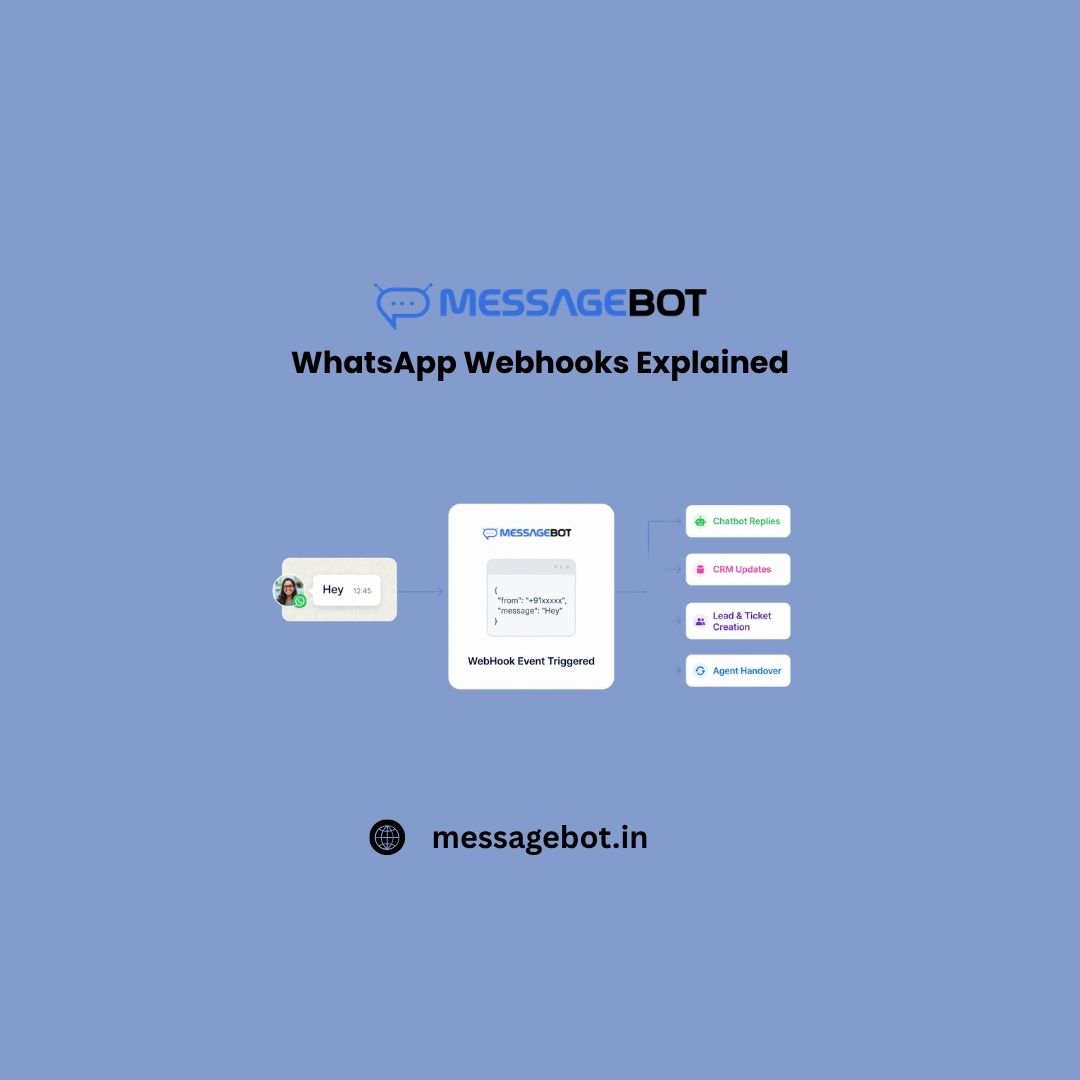
These are general market estimates. The business case for automation is straightforward: it shifts conversations from billable outbound messages to free inbound service-window interactions. The monthly chatbot fee is often offset by reduced per-message spend and lower agent hours. Setting up delivery tracking and webhook events alongside your chatbot ensures you have full visibility into what's being delivered and what isn't.

How to Evaluate a WhatsApp BSP on Pricing

Meta's per-message charges are fixed and identical across all providers. What varies is the platform layer. Here's what to compare:

Evaluation Factor What to Ask Why It Matters
Per-message markup Does the BSP add a markup on Meta's rates? Some charge ₹0.02–₹0.05 per message extra — invisible in headline pricing, significant at volume
Platform fee model Flat monthly or usage-based? Flat is predictable; usage-based is cheaper at low volume, expensive at scale
Onboarding cost One-time setup fee? What's included? Some BSPs charge ₹2,000–₹5,000 for account configuration
Minimum commitment Monthly, quarterly, or annual? Annual plans discount but reduce flexibility
Chatbot bundled Included or separate? Basic chatbots often bundled; advanced flows usually extra
Multi-channel support SMS and Voice covered too? Reduces integration overhead for OTP fallback
Support SLA Hours and channels? Critical for time-sensitive OTP delivery issues
API documentation Complete and current? Poor docs add hidden developer time cost

WhatsApp BSP Comparison (India 2026)

Provider Pricing Style Automation Support
MessageBot Usage-based Chatbots + APIs 24×7
Getgabs  Usage-based Chatbots + APIs 24×7
GetItSMS Usage-based Chatbots + APIs 24×7
Wati Subscription + usage Chatbots Business hours
AiSensy Subscription Campaign tools India-focused

Meta's per-message charges are identical across all providers. The table above covers platform-layer differences only. Evaluate based on your use case — a D2C brand running campaigns needs different tooling than a fintech handling high-volume OTPs.

How to Reduce Your WhatsApp API Spend

Classify templates correctly before submitting. An order update is utility. A "here's 10% off your next order" follow-up is marketing. Misclassification at volume is the most avoidable source of excess charges.

Design inbound flows to trigger the service window. Click-to-WhatsApp ads, website chat widgets, QR codes on packaging — every inbound message opens a free 24-hour window. Every utility reply inside it costs nothing.

Use SMS as fallback, not WhatsApp for every audience. WhatsApp requires explicit opt-in. For customers without it, SMS is often more cost-effective for basic notifications. If you're building a fallback strategy, understanding how bulk SMS routing works in India — and the difference between direct and grey routes — affects both delivery reliability and cost.

Automate repetitive inbound flows. Chatbots handling FAQ, order status, and standard support keep conversations inside the service window instead of triggering new billable outbound templates. The WhatsApp chatbot flows businesses use most in India tend to be order tracking, payment confirmation, and appointment booking — all high-volume, low-complexity interactions.

Monitor quality rating actively. A restricted account can't send at the volume you need — meaning retry messages, duplicated effort, and inflated per-outcome cost.

Review your message category mix monthly. Growth shifts your marketing-to-utility ratio. A monthly review catches misclassifications before they accumulate into significant overspend.

Frequently Asked Questions

Is WhatsApp Business API free to use in India? No. You pay per delivered template message at Meta's published rates — ₹0.8631 for marketing, ₹0.115 for utility and authentication (domestic), ~₹2.30 for authentication international. Service replies within customer-initiated 24-hour windows are free with no cap. Add your BSP's monthly platform fee and 18% GST to arrive at total monthly spend.

What is the WhatsApp API cost per message in India?
It depends on the message category. Marketing: ₹0.8631. Utility and authentication (domestic): ₹0.115. Authentication International (non-Indian numbers): ~₹2.30. Service window replies: free. Undelivered messages are not charged.

Is DLT registration required for WhatsApp messages in India? No. WhatsApp API operates entirely outside TRAI's DLT framework, which applies only to SMS. You do not need DLT sender registration, entity registration, or template pre-approval on any telecom portal. The mechanics of how WhatsApp OTP flows are structured — including template format, expiry handling, and fallback logic — are different from SMS OTP in several important ways.

Can I use my existing WhatsApp number for the API? No. A number cannot be simultaneously active on the WhatsApp consumer app or Business App and the Cloud API. You need a dedicated number — a new SIM, landline, or virtual number capable of receiving an OTP for verification.

How long does WhatsApp Business API setup take? End-to-end setup typically completes within 1–3 working days with complete documentation. Business verification through Meta Business Manager can occasionally take longer. Number registration and template approval are usually done within hours.

Conclusion

WhatsApp Business API pricing in India is genuinely cost-competitive for transactional and support use cases. At ₹0.115 per OTP or order update, the per-message economics are broadly in line with SMS — with better delivery reliability, richer formatting, and higher engagement.

Charges only become a concern in two situations: high-volume marketing campaigns without clear revenue attribution, and template misclassification that inflates the per-message rate unnecessarily. Both are avoidable with upfront planning.

The component most businesses underestimate is the BSP layer — separate from Meta's fixed rates, variable across providers, and the one part of your total spend you can actually control. Understanding both layers before committing eliminates invoice surprises.

If you're evaluating WhatsApp Business API for notifications, OTP delivery, customer support, or marketing automation, MessageBot provides official WhatsApp API access with transparent pricing, onboarding support, and developer-friendly APIs. Get started here.

Share

Ready to Transform Your Business Communication?

Join thousands of Indian businesses already using MessageBot to engage customers effectively and drive business growth.

Free 100 SMS credits
24/7 support
TRAI compliant setup
No setup fees