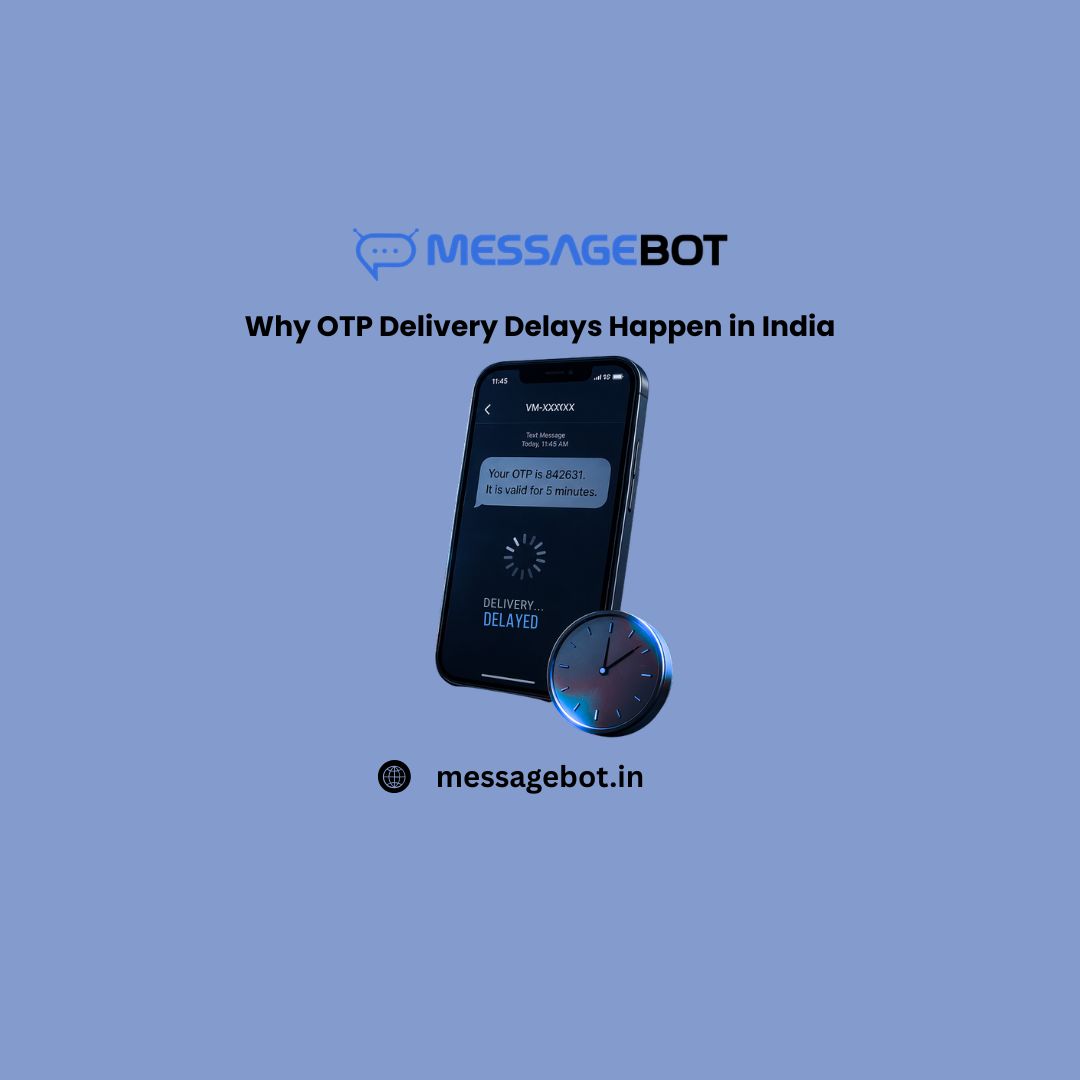
OTP delays usually become visible at the worst possible moments. A customer is trying to complete payment during a midnight sale. A banking app waits for verification before allowing login. Someone taps “resend OTP” repeatedly because the first message still hasn’t arrived.
From the frontend, it looks like a small delay. Inside telecom infrastructure, however, multiple systems may already be overloaded simultaneously. Queues begin growing inside operator networks. Routing systems start balancing sudden traffic spikes. DLT scrubbing layers process enormous authentication traffic in real time. Some operators continue delivering instantly while others slow down under pressure.
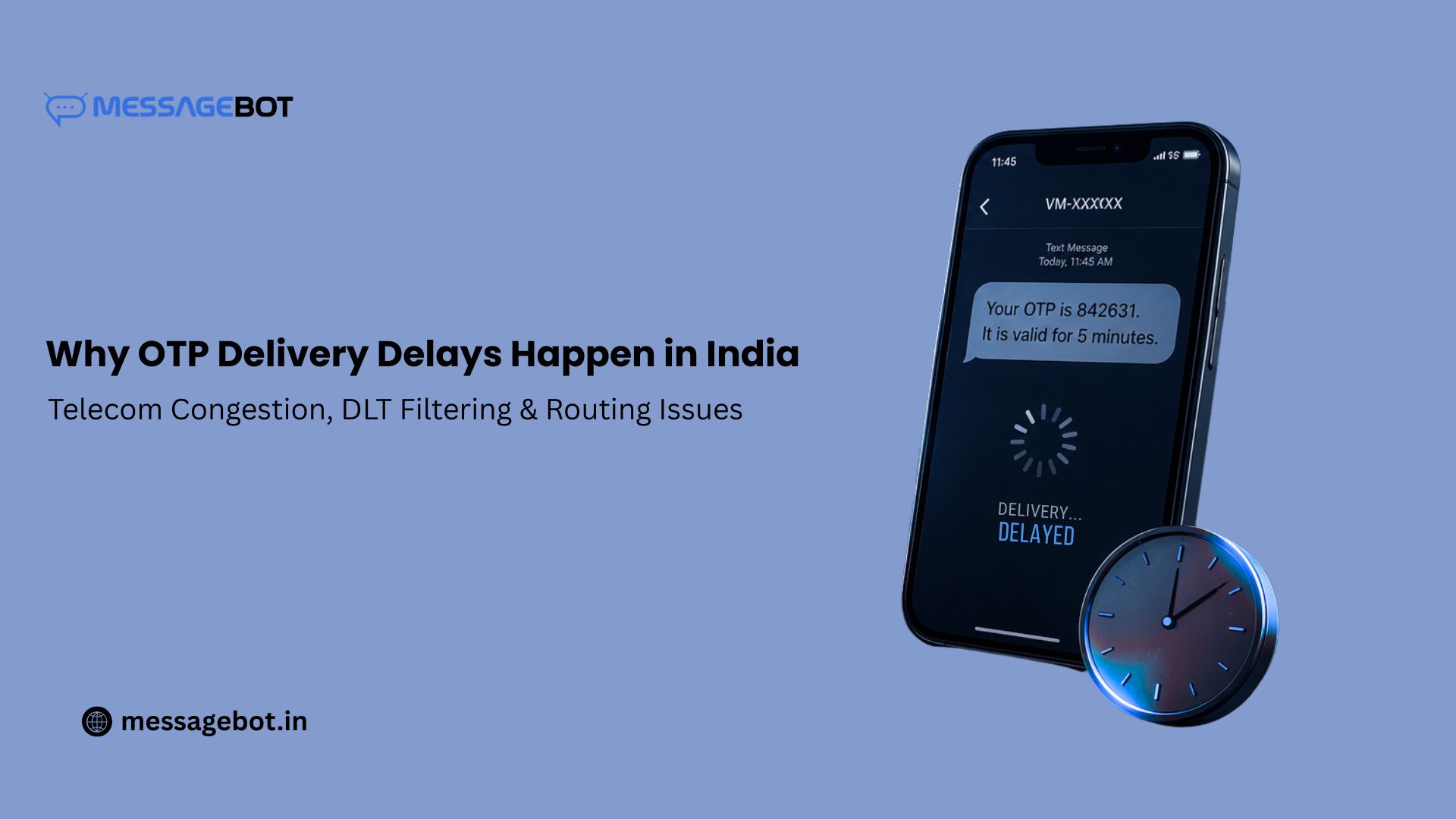 This is why OTP delivery in India often behaves unpredictably during high-traffic periods. The message itself is small. The infrastructure handling millions of those messages at the same moment is not. For businesses running authentication systems, OTP delivery is no longer just an API function quietly working in the background. It directly affects login success, payment completion, onboarding flows, fraud prevention, and customer trust. And as authentication traffic across India keeps increasing, understanding why OTP delivery delays happen is becoming just as important as sending the OTP itself.
OTP Delivery Is No Longer a Simple SMS Process
A few years ago, OTP traffic volumes were relatively manageable. Today, almost every digital platform depends on real-time authentication systems. Ecommerce apps, fintech companies, banking platforms, logistics providers, healthcare systems, ticketing portals, food delivery apps, and government services all generate enormous OTP traffic continuously throughout the day.
This has fundamentally changed how telecom messaging infrastructure behaves in India.A single flash sale or ticket launch can suddenly trigger hundreds of thousands of authentication requests within minutes. During these spikes, telecom systems are forced to process massive traffic bursts simultaneously across multiple operators and routing layers. This is one reason businesses scaling authentication systems increasingly study telecom routing behavior under traffic pressure instead of treating OTP delivery as a simple SMS feature.
What Actually Happens Before an OTP Reaches the User
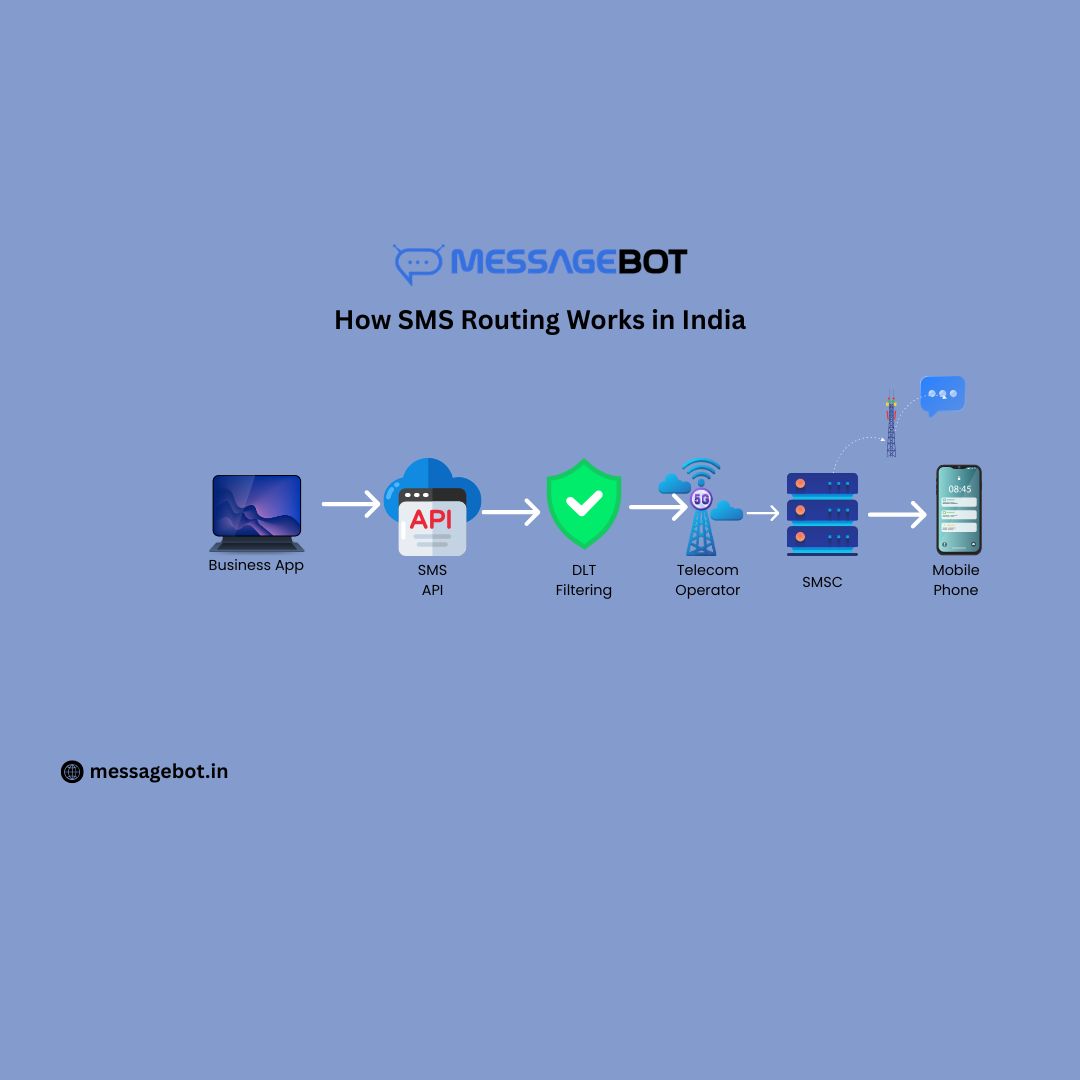
Most users imagine OTP delivery as a direct process. An application sends a request and the message reaches the phone instantly. In reality, the message travels through multiple telecom systems before final delivery happens.
The request first moves through the API layer where credentials, sender IDs, templates, and routing permissions are validated. From there, traffic enters messaging gateways that decide how requests should move across operator routes. Before reaching telecom networks, DLT scrubbing systems validate whether the content matches approved templates.
Only after these checks does the message finally move toward operator SMSCs where queueing, forwarding, retry handling, and delivery attempts begin. Under normal traffic conditions, this flow usually feels instant. During congestion, every additional processing layer can increase delay.
Why DLT Systems Sometimes Slow Down OTP Delivery
One of the most misunderstood parts of Indian messaging infrastructure is DLT processing. Many businesses assume OTP delays are caused only by operators or APIs. In reality, DLT validation itself can introduce delays when authentication traffic volumes become extremely high.
Before traffic enters telecom networks, DLT systems validate:
- sender identity
- approved templates
- traffic category
- variable structure
- content matching behavior
Even small inconsistencies may affect processing speed.
A business may slightly modify wording inside an OTP template without realizing the updated structure no longer matches the approved format exactly. In some situations, the message gets rejected immediately. In others, validation itself slows down while systems attempt verification. This is why many businesses facing inconsistent OTP timing eventually discover issues connected to DLT template compliance behavior rather than the API itself.
Why OTP Delivery Delays Increase During Traffic Spikes
OTP infrastructure behaves very differently during large-scale events. During normal periods, operator queues usually remain balanced enough that delivery appears stable. But during ecommerce sales, IPL campaigns, examination results, festival traffic, or government registration deadlines, authentication requests increase dramatically within very short periods.
That sudden traffic pressure starts affecting multiple layers of telecom infrastructure simultaneously. Routing systems begin balancing unusually high authentication volumes, operator queues start growing faster than normal, SMSCs process far more requests than their comfortable handling capacity, and retry systems activate more aggressively as delayed OTP requests continue increasing. At the same time, filtering engines become more sensitive to abnormal traffic spikes, making delivery timing even less predictable during peak periods.
As queues grow larger, delivery timing becomes less predictable. One user may receive an OTP within seconds while another waits significantly longer despite using the same application at the same moment. This is where infrastructure quality starts becoming businesses experiencing repeated authentication delays often discover the root problem lies in throughput saturation inside telecom messaging systems.
The Role of SMSCs in OTP Congestion
Inside telecom infrastructure, SMSCs act as message processing hubs. Their job is much larger than simply forwarding SMS traffic. SMSC systems temporarily store messages, manage queue balancing, retry failed deliveries, generate acknowledgements, and coordinate delivery attempts across operator networks.
When traffic remains stable, this process works quietly in the background. But during congestion periods, SMSCs themselves may become overloaded if incoming OTP traffic exceeds available processing capacity. This is one reason delivery behavior often differs between Airtel, Jio, Vodafone Idea, and BSNL even when the same provider sends traffic across all networks. Operator-side congestion plays a major role in OTP timing consistency.
Why Cheap Routes Often Create OTP Problems
Low-cost messaging routes usually look acceptable during moderate traffic conditions. The real problems appear when infrastructure suddenly faces heavy authentication volume.
Weak routing systems may:
- overload queues
- prioritize cheaper paths
- throttle traffic aggressively
- delay delivery acknowledgements
- create unstable retry loops
These issues become highly visible during large traffic spikes because unofficial or low-priority routes rarely receive stable operator prioritization. Businesses relying on grey-route delivery infrastructure often notice OTP timing problems first during high-concurrency events where routing pressure increases rapidly. For authentication systems, even small delivery delays affect customer trust almost immediately.
Why OTP Queueing Becomes a Serious Problem
Every messaging platform uses queues internally. The moment traffic volume exceeds available processing capacity, OTP requests temporarily wait before they can move through routing layers. Under healthy infrastructure conditions, queues clear fast enough that users never notice. Under overloaded conditions, delays compound quickly.
This becomes especially problematic for authentication systems because OTP validity windows are extremely short. A promotional campaign delayed by several minutes may still remain useful later. An OTP delayed by even thirty seconds can already interrupt payment completion or login flows. This is one reason enterprise messaging systems usually separate authentication traffic using dedicated transactional routing infrastructure rather than mixing OTPs with promotional campaigns.
Why Repeated OTP Resends Make Congestion Worse
One delayed OTP often creates another infrastructure problem immediately. Users tap “resend OTP” multiple times assuming the original request failed completely. In reality, the first OTP may already be waiting somewhere deeper inside telecom queues.
Those repeated resend attempts suddenly create additional authentication traffic pressure at exactly the wrong moment. Operator systems then detect abnormal traffic bursts from the same application or sender ID, increasing filtering sensitivity and queue load even further.
This creates a cycle where:
- congestion delays OTPs
- users request more OTPs
- traffic volume increases further
- queues become larger
- delays grow worse
Large authentication platforms spend significant effort optimizing resend logic specifically to avoid this behavior during traffic spikes.
Why Delivery Reports Matter During OTP Delays
A successful API response does not necessarily mean the OTP reached the handset instantly. It usually only confirms that the platform accepted the request successfully. Actual delivery happens later inside operator infrastructure.
This is why businesses monitoring delivery report visibility across operators usually identify congestion problems much faster than teams relying only on frontend application logs.
DLRs help reveal:
- queue buildup
- expired traffic
- operator congestion
- retry behavior
- filtering delays
- route instability
Without proper delivery visibility, diagnosing OTP timing issues becomes extremely difficult.
Why Enterprise OTP Systems Use Fallback Channels
Modern authentication systems rarely depend entirely on a single delivery path anymore. Businesses handling critical login and payment workflows increasingly combine SMS with WhatsApp-based OTP delivery systems, voice fallback verification, push notifications, and adaptive retry systems.
The goal is not simply redundancy. It is maintaining authentication reliability during unpredictable telecom congestion. As messaging traffic across India keeps growing, fallback infrastructure is becoming an essential part of enterprise authentication architecture rather than an optional enhancement.
Conclusion
OTP delivery delays in India are rarely caused by a single issue. In most situations, delays emerge from multiple infrastructure layers interacting simultaneously under traffic pressure. Queue congestion, DLT validation, routing instability, throughput saturation, SMSC overload, retry behavior, and operator filtering all influence how quickly authentication messages finally reach users.
For businesses running authentication systems at scale, understanding these telecom layers is becoming increasingly important. Because today, OTP delivery is no longer just a messaging feature working quietly in the background. It is a critical part of platform reliability, customer experience, and digital trust.