At some point, the WhatsApp Business App stops being enough. You need to send messages at scale, automate responses, run multiple agents on one number, or integrate WhatsApp with your CRM. That’s when you start looking for a WhatsApp Business API provider.
The problem: every provider’s website says the same things. Easy setup. Reliable delivery. Great support. The real differences in pricing structure, API quality, webhook reliability, OTP handling only show up once you dig in.
 This guide explains how the WhatsApp BSP model works, what separates good providers from average ones, and which WhatsApp Business API provider makes the most sense for your specific use case.
What Is a WhatsApp Business API Provider?
You cannot access the WhatsApp Business API directly. Meta distributes API access through authorised partners called Business Solution Providers (BSPs). These companies have been vetted by Meta, built technical integrations with WhatsApp’s infrastructure, and are approved to onboard businesses onto the platform.
When you sign up with a WhatsApp API provider, they handle your number provisioning, Meta Business verification, message template submission, and the API or platform layer you use to send messages. Some stop there and give you a clean API. Others build a complete platform on top, adding chatbot builders, shared inboxes, campaign tools, and analytics, and price their services accordingly.
Meta vs BSP: What’s the Difference?
Meta owns WhatsApp and sets the rules, including which templates are allowed, how message pricing works, and when accounts are restricted. The underlying delivery infrastructure is also Meta’s. Your BSP sits between you and Meta. They manage your number, submit templates on your behalf, maintain the API connection, and add their own platform features on top. They may charge a markup, platform fee, subscription fee, or a combination of these on top of Meta’s message pricing.
The practical consequence is that your BSP becomes the first point of contact for delivery issues, template rejections, and number restrictions. Their ability and willingness to escalate to Meta on your behalf is part of what you’re paying for.
WhatsApp Cloud API vs BSP: Which Route Is Right for You?
Meta now offers a self-serve option called WhatsApp Cloud API, which provides direct access to WhatsApp’s infrastructure without requiring a BSP in the middle.
Direct Cloud API gives you full control and no platform markup. You pay only Meta’s published message rates. The downside: no support, no onboarding help, no dashboard. Template management, webhook setup, number hosting, error handling all on your team. If something breaks, you fix it.
Going through a BSP means paying a fee in exchange for someone managing the technical complexity. They handle provisioning, guide you through Meta’s verification process, assist with template submissions, and give you a support contact when things go wrong.
| Direct Cloud API | BSP | |
| Cost | Lower (no markup) | Higher (platform fee) |
| Technical requirement | High | Low to medium |
| Onboarding | Self-managed, slower | Provider-guided, faster |
| Support | None from Meta | Through your BSP |
| Template management | Self-managed | Provider assists |
| Dashboard / inbox | Build your own | Included with most BSPs |
| Best for | Developers, product teams | Most Indian businesses |
For most Indian businesses, a BSP is the faster and more manageable path. If you’re a tech company building WhatsApp natively into your own product, the Cloud API is worth evaluating.
What a BSP Actually Handles
Even businesses that are technically capable often go the BSP route because of how much ground a provider covers:
Number provisioning: New number approvals and existing number migrations require a verification process. BSPs have done this hundreds of times and know how to avoid the common delays.
Template management:
Business-initiated messages sent outside an active customer service window typically require approved templates. Within the 24-hour customer service window, businesses can send free-form replies, and utility templates delivered during that window are free.
BSPs help businesses create, submit, and revise templates. Experienced providers understand the patterns that commonly lead to template rejections and can often speed up the approval process.
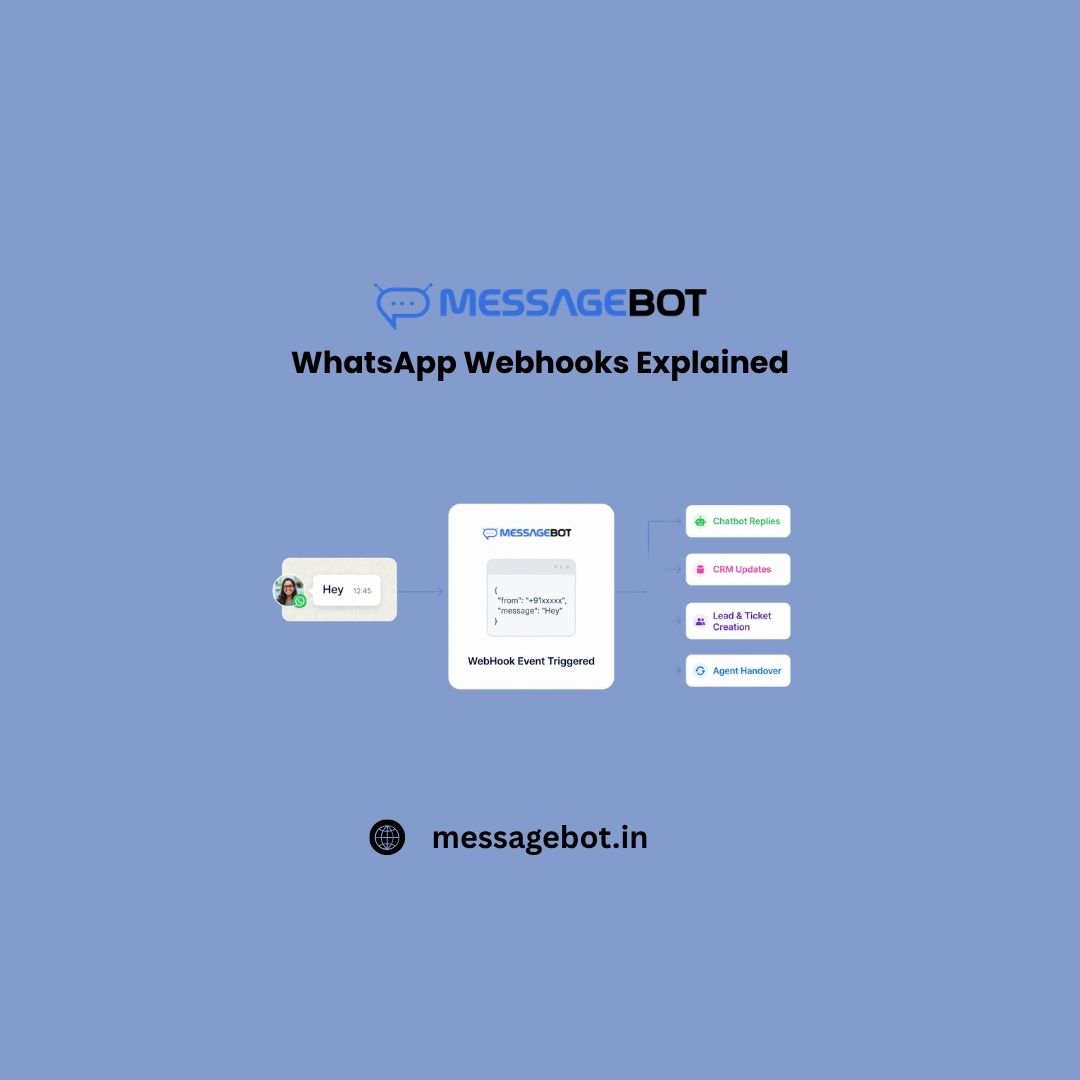
Webhook infrastructure: Delivery receipts, read receipts, and incoming messages are all delivered through webhooks. A reliable BSP queues and retries webhook delivery if your endpoint is temporarily down. An unreliable one drops events silently.
Automation: Keyword triggers, chatbot flows, API-driven bot logic. The depth varies significantly between providers.
Support: When your WhatsApp number’s quality rating drops or a campaign template gets rejected overnight, you want a support team that picks up the phone.
Integrations: Native connections to Shopify, Zoho, HubSpot, Freshdesk, WooCommerce, Razorpay. The list varies by provider.
Types of WhatsApp API Providers in India
The BSP market has split into fairly distinct categories. Knowing which type fits your needs narrows the list quickly.
Developer-first / API providers: Minimal platform, clean REST API, solid documentation. You build the flows, inbox, and dashboards yourself. Best for technical teams who need control over the integration.
CPaaS platforms: WhatsApp is one channel alongside SMS, Voice, and Email, all under a single API. If you’re already using a CPaaS provider for SMS or voice in India, adding WhatsApp through the same vendor reduces integration overhead.
Marketing-focused platforms: Built around WhatsApp broadcast campaigns, audience segmentation, and campaign analytics. Strong UI for marketing teams, but API access is usually limited or tiered.
CRM and support-focused platforms: The core product is a shared team inbox for handling inbound WhatsApp conversations. Multiple agents, ticket routing, conversation labels, SLA timers. Less suited for high-volume outbound.
Enterprise platforms: Custom contracts, dedicated account management, enterprise SLAs, and integrations with Salesforce, SAP, or similar. Not designed for SMBs.
WhatsApp BSP Comparison: Major Providers in India
| Provider | API Capability | Team Collaboration | Automation | Multi-Channel | Typical Use Case |
|---|---|---|---|---|---|
| MessageBot | Full APIs + Webhooks + SDKs | Shared inbox | Advanced workflows | WhatsApp + SMS + Voice | Developers, OTP, notifications, custom integrations |
| AiSensy | Platform-first APIs | Shared inbox | Campaign automation | WhatsApp only | Marketing campaigns |
| Wati | Secondary APIs | Shared inbox | Workflow builder | WhatsApp only | Customer support |
| Interakt | Secondary APIs | Shared workspace | Commerce automation | WhatsApp only | D2C & e-commerce |
| DoubleTick | Limited APIs | Team collaboration | Basic workflows | WhatsApp only | Sales teams |
| Gallabox | Secondary APIs | Multi-agent inbox | Automation builder | WhatsApp only | Support teams |
| Gupshup | Full APIs | Enterprise tools | Conversational AI | WhatsApp + SMS + RCS | Enterprise messaging |
| Twilio | Full APIs | Build yourself | Developer-led | Omnichannel | Developers |
| Sinch | Full APIs | Build yourself | Developer-led | Omnichannel | Enterprise |
| Kaleyra | Full APIs | Build yourself | Developer-led | Omnichannel | High-volume notifications |
What to Compare When Evaluating WhatsApp Business API Providers
Pricing and Message Charges
Meta now charges on a per-message basis rather than the older conversation-based model. Pricing varies by message category and recipient country.
Messages are grouped into four categories:
- Marketing: promotional campaigns and offers.
- Utility: order updates, alerts, and reminders.
- Authentication: OTP and verification messages.
- Service: free-form replies sent within the customer service window. These messages remain free.
Some BSPs add subscription fees or platform markups on top of Meta’s message rates, while others pass Meta pricing through without additional charges. That markup is where providers differ most, and it’s rarely the headline number on their pricing page. Always ask for the total cost per delivered message by category, not just the monthly platform fee. For the latest Meta message pricing in India, see our WhatsApp Business API pricing guide.
API quality and webhook reliability
If you’re connecting WhatsApp to your own systems, the API is the product. Look for clean REST endpoints, complete documentation with request and response examples, a sandbox for testing, and clear rate limit documentation.
Webhooks matter as much as the API. They’re how WhatsApp pushes inbound messages, delivery receipts, and read receipts to your system. The question to ask every provider: what happens when your endpoint is down? Do they queue and retry, or do you lose those events? Our WhatsApp webhooks guide covers the full event model and what reliable webhook delivery looks like.
Automation and shared inbox
Automation depth varies from basic keyword triggers to full flow builders with conditional logic and API calls mid-flow. If you’re building a WhatsApp chatbot, check whether the provider’s no-code builder can handle your use case or whether you’ll need to build it via API regardless. See our WhatsApp chatbot guide for what’s achievable.
For inbound-heavy teams, the shared inbox matters just as much. Agent assignment, collision prevention (two agents replying to the same chat), internal notes, conversation labels, and supervisor views are the things that break down without proper design.
CRM integrations and analytics
Native integrations with Zoho CRM, HubSpot, Shopify, WooCommerce, Freshdesk, and Razorpay are the most commonly needed in the Indian market. If your stack isn’t natively supported, confirm whether a webhook-based or Zapier integration is available.
On reporting: delivery rates, read rates, and template performance by category are the minimum. Better platforms add agent-level metrics, campaign comparisons, and conversation volume trends over time.
OTP and authentication handling
WhatsApp OTP is widely used in India, especially as a fallback when SMS delivery is slow or filtered. However, not every provider handles authentication messaging equally well. Some suffer from latency issues that make them unsuitable for real-time verification flows. If OTP is a core use case, test actual delivery speed before committing to a provider. For implementation details, see our guide on WhatsApp OTP API integration.
Support
The right question isn’t whether a provider offers support every provider claims that they do. The right questions are: Is it 24/7 or business hours only? Email-only, or chat and phone? Do they have India-based staff who understand local network behaviour and compliance? Can they escalate to Meta on your behalf? A WhatsApp number going down during a sale or a product launch is a business emergency. Support quality determines how quickly that emergency ends.
Which WhatsApp BSP Is Best for Your Use Case?
| Use Case | Best Fit |
| Developers / custom integrations | MessageBot, Twilio |
| E-commerce / D2C brands | Interakt |
| WhatsApp marketing & broadcasts | AiSensy |
| Customer support teams | Wati, Gallabox |
| Sales teams | DoubleTick |
| Large enterprises (India) | MessageBot, Gupshup |
| Global enterprise | Sinch |
| Multi-channel (WhatsApp + SMS + Voice) | MessageBot |
| OTP & authentication | MessageBot, Kaleyra |
Small businesses and startups: You don’t need an enterprise platform. Subscription-based options like AiSensy, Wati, or Gallabox get you running without a developer. Usage-based providers give you more room to scale when you’re ready.
D2C and e-commerce brands: Native Shopify and WooCommerce integrations, order update templates, and abandoned cart flows are the priority. Interakt has built a strong presence among Indian D2C and e-commerce brands thanks to its Shopify integrations and commerce-focused workflows.
Enterprises (India): For enterprises that require WhatsApp alongside SMS and RCS, platforms such as Gupshup and MessageBot offer broader communication capabilities and enterprise-grade support.
Developers and technical teams: Clean API, honest documentation, reliable webhooks, a working sandbox. Providers where the API is secondary to a no-code platform will frustrate you.
OTP and authentication use cases: Prioritise latency and authentication conversation support over platform features. CPaaS providers handle this better than marketing platforms as a category. Test before you buy.
High-volume notifications: Delivery throughput and rate limits matter more than dashboards. Usage-based pricing is almost always cheaper at scale than per-seat subscriptions. Also ask about API rate limits and webhook retry behaviour, since throughput constraints usually become visible only during traffic spikes.
Can You Migrate Between WhatsApp API Providers?
Yes. Here’s what moves and what doesn’t.
Your WhatsApp number belongs to your business, not your provider. Meta allows BSP-to-BSP transfers. The process: disconnect from your current BSP, initiate a transfer with the new one, go through Meta’s approval. Sending is typically paused for a few business days during the transfer.
Your approved templates are tied to your WhatsApp Business Account (WABA), not the BSP. They travel with you. You don’t need to resubmit them for Meta approval, although you may need to re-import them into your new provider’s platform.
Your conversation history stays with your old BSP. It’s stored at the platform level, not at Meta. Export it before you initiate any migration or you lose access.
Before you switch export your contacts, conversation history, and template content. Confirm the migration timeline with your new provider and plan the transition carefully to minimise disruption.
One more thing: ask any provider you’re evaluating, before you sign, what their number porting process looks like if you want to leave. Providers who make migration easy aren’t afraid of this question.
Common Mistakes When Choosing a WhatsApp API Provider
Comparing subscription prices without factoring in message costs: The monthly platform fee is only part of your cost. Meta’s message fees plus your BSP’s markup is the real number. Get that figure per category before comparing.
Underestimating support: Support seems fine until your number gets flagged at 11pm before a major campaign. Ask about incident response specifically, not just general support hours.
Skipping webhook verification: Webhooks are how your system receives inbound messages and delivery events. Some entry-level plans restrict webhook access. Confirm before you onboard, not after.
Ignoring API rate limits: OTP flows and flash sale alerts involve burst traffic. A low rate limit means queuing and delays at exactly the wrong moment. Get the per-second limit in writing.
Not planning for failover: What happens if WhatsApp delivery fails on a transactional message? Does the provider support automatic SMS fallback? Most don’t. If reliability is non-negotiable, build this into your evaluation.
Not asking about number portability upfront: “How do I leave?” is as important as “How do I sign up?” Providers who make migration difficult rarely advertise it. Ask the question directly.
Frequently Asked Questions
What is a WhatsApp BSP?
A Business Solution Provider is a company authorised by Meta to resell and manage WhatsApp Business API access. You sign up with them rather than directly with Meta. They handle provisioning, templates, and the API or platform layer you use to send messages.
Do I need a BSP or can I use the WhatsApp Cloud API directly?
You can use Meta’s Cloud API directly, no BSP required. But you’ll manage everything yourself: number hosting, template submissions, webhook configuration, error handling. Many businesses choose a BSP because the managed route simplifies onboarding, template approvals, and ongoing support. Developers building WhatsApp into their own products often prefer the Cloud API.
What’s the difference between WhatsApp Business App and WhatsApp Business API?
The WhatsApp Business App is free and designed for small businesses, while the API is intended for larger-scale communication, automation, and system integrations. See our WhatsApp Business App vs API guide for the detailed comparison.
How long does WhatsApp API onboarding take in India?
With complete documentation, onboarding and verification are often completed within a few business days, although timelines vary depending on Meta’s review process and business verification status.
Can I keep my WhatsApp number if I switch providers?
Yes. Your number is portable. The transfer takes a few business days and involves a brief pause in sending. Templates migrate with you; conversation history doesn’t.
How does WhatsApp Business API pricing work?
Meta charges on a per-message basis. Pricing depends on the message category and the recipient’s country. Marketing, utility, and authentication messages are charged when delivered, while service messages sent within the customer service window remain free.
Can I use WhatsApp API for OTP delivery in India?
Yes. Authentication messages have a dedicated category with lower rates than marketing messages. Many Indian businesses use WhatsApp OTP alongside SMS OTP.
Why do WhatsApp message templates get rejected?
Common reasons: promotional language in a utility template, missing opt-out language, incorrect variable formatting, or content that violates WhatsApp’s commerce policy. Your BSP should help you revise and resubmit. Our WhatsApp API error codes guide covers what you’ll see during template submission and sending.
Do all WhatsApp API providers use the same infrastructure?
Yes. Message delivery ultimately runs through Meta’s infrastructure. The differences between providers lie in APIs, automation capabilities, support quality, onboarding experience, and multi-channel features rather than message delivery itself.
Final Thoughts
Choosing a WhatsApp Business API provider is less about message delivery and more about the platform around it. Meta controls the underlying WhatsApp infrastructure, but providers differ significantly in API quality, webhook reliability, automation capabilities, support responsiveness, and pricing transparency. For marketing-heavy teams, campaign tools may matter most. For developers, API quality and webhooks are usually the deciding factors. For enterprises, support and multi-channel capabilities often outweigh platform fees.
If you’re evaluating providers, shortlist two or three options, test onboarding, compare total message costs, and verify webhook reliability before committing to a long-term contract.