
Businesses in India send billions of SMS messages every month, but very few teams actually understand what happens after an application triggers an SMS API request. From the outside, sending a message looks simple, an OTP arrives, a delivery report updates, and the workflow continues. Underneath that experience is a layered telecom infrastructure involving API gateways, DLT scrubbing systems, operator routing, filtering engines, throughput limits, and delivery acknowledgements. That complexity becomes visible the moment businesses start scaling.
An e-commerce platform suddenly notices OTP delays during festival traffic. A fintech application sees transaction alerts failing on one operator while working perfectly on another. A healthcare platform discovers that template mismatches inside DLT are silently blocking appointment reminders. These are not application-level problems anymore. They are messaging infrastructure problems. This is where a properly designed SMS API system matters.
 In India, SMS APIs are no longer just developer tools for sending text messages. They have become a core part of enterprise communication infrastructure used for authentication, banking alerts, logistics updates, customer engagement, payment notifications, ticket confirmations, and operational workflows. Understanding how SMS APIs actually work helps businesses improve delivery rates, reduce OTP latency, avoid DLT rejections, and build reliable communication systems that scale during high traffic conditions.
What Is an SMS API?
An SMS API allows applications, websites, CRMs, ERPs, mobile apps, and backend systems to send and receive SMS messages programmatically through telecom messaging infrastructure. Instead of manually uploading contacts and sending campaigns from a dashboard, businesses integrate directly with an SMS platform using HTTP APIs or SMPP connectivity. Once integrated, applications can trigger messages automatically based on user actions or system events.
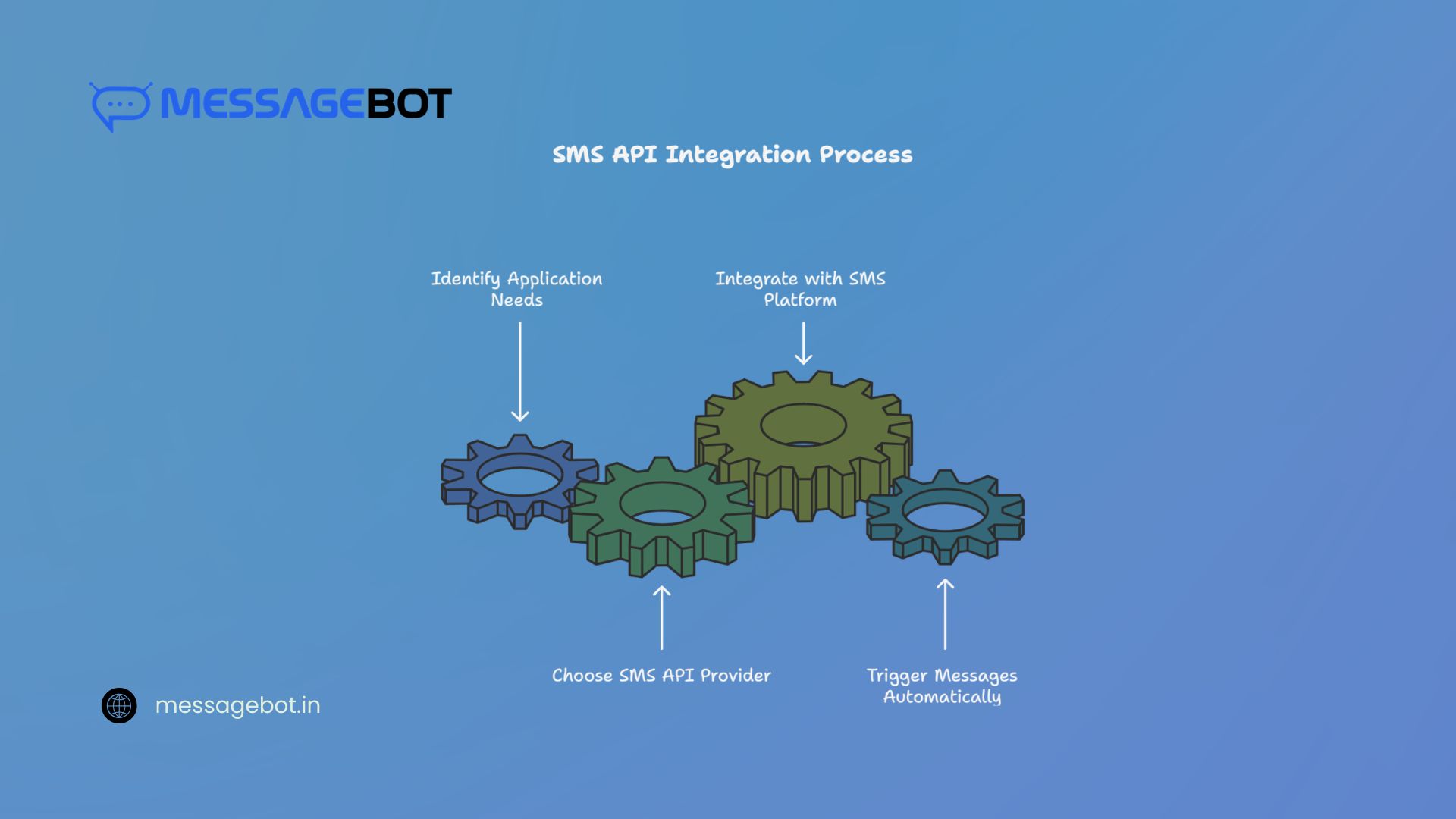 For example:
- A banking app sends transaction alerts instantly after payment confirmation
- A delivery company sends shipment tracking updates automatically
- A healthcare platform triggers appointment reminders before consultations
- A fintech app sends OTP verification codes during login attempts
At the infrastructure level, the API acts as a communication bridge between enterprise software and telecom operator networks. In India, most businesses today use REST-based SMS APIs because they are easier to integrate with modern applications, cloud systems, and backend services. Businesses building scalable authentication systems usually start with a reliable SMS API integration architecture before expanding delivery across multiple operators.
How SMS APIs Actually Work in India
Most businesses assume SMS delivery is instant because the process looks simple from the front end. A user clicks “Login,” an OTP arrives, and the flow continues. But inside Indian telecom networks, multiple systems process that request before the message even reaches the handset.
The moment an application triggers an SMS API request, the platform first checks authentication credentials, sender IDs, approved templates, route permissions, and traffic type. Only after these validations does the request move toward DLT scrubbing systems where telecom operators verify whether the content matches registered templates. This is where many delivery issues quietly begin.
A message may leave the application successfully but still fail before operator routing starts because the DLT layer rejects the template format. In many cases, businesses only discover this after customers begin reporting missing OTPs or delayed alerts caused by template approval mismatches inside DLT systems.
Once the message clears DLT validation, the traffic moves through operator SMSCs where queue management, filtering systems, throughput allocation, and spam scoring start affecting delivery behaviour. During normal traffic conditions, this process usually completes within seconds. During peak periods like Diwali sales or ticket launches, congestion inside these layers becomes far more visible.
That is why enterprise SMS infrastructure is not just about having an API endpoint. The actual routing quality underneath the API determines whether messages consistently reach users during real-world traffic conditions, especially during large-scale OTP delivery failures.
Why SMS APIs Still Matter in India
Every few years, people predict that SMS will disappear completely. Yet almost every major bank, fintech platform, logistics company, healthcare provider, and government service in India still depends on SMS infrastructure for critical communication. The reason is reliability.
Unlike app-based messaging channels, SMS does not require internet access, smartphone compatibility, or application installation. A transactional alert can still reach a user in a low-connectivity area where push notifications or app-dependent channels may fail entirely.
This becomes especially important for OTP verification workflows used by Indian platforms . Even today, SMS remains one of the fastest ways to deliver authentication codes across diverse mobile networks and device types in India.
For enterprises, SMS APIs also provide operational stability during internet outages, app failures, or fallback authentication scenarios. That is why most large-scale communication systems combine SMS with WhatsApp, Voice APIs, and push notifications as part of a broader omnichannel messaging strategy.
The Difference Between an SMS API and an SMS Gateway
These two terms are often used interchangeably, but technically they are not identical. An SMS API is the integration interface developers use to trigger messaging functionality from applications. An SMS Gateway is the infrastructure layer responsible for routing traffic between enterprise systems and telecom operator networks. The API is what developers interact with. The gateway is what actually moves traffic through telecom routes.
A high-quality enterprise messaging gateway setup determines:
- Routing quality
- Delivery speed
- Operator connectivity
- Retry handling
- Queue management
- TPS handling
- DLR accuracy
- Failover behavior
This is why businesses sometimes experience very different delivery performance even when both providers claim to offer “SMS APIs.” In reality, the routing infrastructure behind those APIs may be completely different.
Understanding DLT Routing in India
India’s Distributed Ledger Technology framework fundamentally changed how enterprise SMS delivery works. Today, every legitimate business sending SMS traffic in India must comply with DLT regulations introduced by TRAI. This includes registering:
- Business entities
- Sender IDs
- Templates
- Consent mechanisms
When an SMS API request is triggered, the message content is validated against approved templates before operator delivery is allowed. This process is called DLT scrubbing. The matching engine checks whether the content structure aligns with the approved template format. Even small variations in wording can cause template mismatches.
For example, changing:
“Your OTP is 4567” to: “Use 4567 as your login OTP”
may trigger rejection depending on template approval rules. This is one of the biggest reasons businesses experience sudden SMS failures after deployment. The issue is not always the API itself. Often, the DLT layer is silently rejecting traffic before operator routing begins.
That is also why template management has become a major operational responsibility for Indian enterprises using SMS APIs at scale. Businesses handling authentication traffic also need to understand how transactional and promotional traffic behave differently across operator routes.
Why OTP SMS Delivery Delays Happen
OTP traffic is extremely sensitive because even a few seconds of delay can impact user authentication, payment flows, or account access.
In India, OTP latency usually happens because of congestion or filtering at one of these layers:
- DLT processing delays
- Operator SMSC congestion
- Improper routing prioritization
- Poor quality fallback routes
- TPS overload during peak events
- Unicode encoding expansion
- Spam scoring or content filtering
Festival periods often amplify these problems. During Diwali sales, ticket launches, banking peaks, or election-related traffic surges, telecom queues become significantly more congested.
This is why enterprise-grade SMS APIs invest heavily in intelligent routing systems, operator balancing, queue optimization, and traffic prioritization. Businesses evaluating OTP delivery reliability across providers usually compare routing consistency more than pricing during high-volume periods. For high-scale OTP systems, infrastructure stability matters more than simply having low pricing.
HTTP APIs vs SMPP Connectivity
Most modern businesses use HTTP-based SMS APIs because integration is straightforward and compatible with web applications, CRMs, mobile apps, and backend systems. SMPP, however, remains important for extremely high-volume enterprise traffic.
HTTP APIs are ideal for:
- Web applications
- SaaS products
- E-commerce platforms
- OTP workflows
- Standard notification systems
SMPP is usually preferred by:
- Telecom aggregators
- Large CPaaS providers
- Enterprise messaging platforms
- High-throughput infrastructure systems
SMPP offers persistent connectivity and lower overhead for massive traffic volumes, but implementation complexity is significantly higher compared to REST APIs. For most Indian businesses, HTTP APIs remain sufficient unless messaging volumes reach carrier-scale throughput requirements.
The Role of Delivery Reports (DLRs)
A successful API response does not always mean successful message delivery. This is one of the biggest misunderstandings in enterprise messaging. When the API accepts a request, it only confirms that the platform received the message submission successfully. Actual handset delivery happens later. Delivery Reports, commonly called DLRs, help businesses track final delivery status.
DLRs can indicate:
- Delivered
- Failed
- Expired
- Rejected
- Undelivered
- Pending
Accurate delivery report visibility across operators becomes critical for OTP systems, financial alerts, and compliance-sensitive communication workflows. Many low-quality providers inflate delivery metrics by masking failed traffic or generating inaccurate DLR responses. In many cases, these inconsistencies are linked to grey-route messaging practices hidden underneath low-cost routing setups.
Why Route Quality Matters More Than Pricing
India’s SMS market is extremely price competitive, which often pushes businesses toward the cheapest providers. Unfortunately, low-cost routing frequently creates long-term operational issues.
Grey routes, unstable operator connectivity, overloaded queues, and weak retry mechanisms may reduce pricing temporarily, but they also increase:
- OTP failures
- Delivery inconsistency
- Regulatory risk
- DLR inaccuracies
- Customer frustration
This becomes especially damaging for sectors like fintech, banking, healthcare, and logistics where message timing directly affects user experience. Reliable SMS APIs focus on stable operator connectivity, compliant routing, proper throughput allocation, and accurate delivery visibility instead of simply competing on the lowest per-SMS cost. Businesses that ignore unverified routing infrastructure often discover the impact only after authentication failures begin affecting users.
Enterprise SMS API Integration Best Practices
Most integration failures do not happen because APIs are difficult to use. They happen because businesses underestimate telecom infrastructure behavior. A reliable integration strategy should include proper retry handling, webhook processing, DLR tracking, route separation, template synchronization, and monitoring systems.
Businesses should also design fallback mechanisms for failed OTP attempts. Many platforms now combine SMS APIs with WhatsApp-based OTP delivery or voice-based verification fallback systems to improve authentication reliability during congestion periods.
Monitoring operator-level performance is equally important because delivery behavior often varies between Airtel, Jio, Vodafone Idea, and BSNL networks. Scalable messaging systems also need traffic balancing during high-volume periods instead of depending entirely on a single routing path.
The Future of SMS APIs in India
SMS infrastructure in India is evolving rapidly alongside AI-driven communication systems, omnichannel messaging platforms, and enterprise automation. However, SMS itself is not disappearing.
Instead, it is becoming part of larger communication ecosystems where APIs coordinate across:
- SMS
- Voice
- RCS
- Push notifications
- Email systems
Even as richer channels grow, SMS APIs remain foundational because telecom-level reach and authentication reliability are still unmatched for critical communication workflows.
Over the next few years, businesses will increasingly prioritize:
- Intelligent routing
- Real-time delivery analytics
- AI-based fraud filtering
- Multi-channel fallback systems
- Carrier-grade reliability
- Compliance automation
Providers that understand telecom infrastructure deeply, not just dashboard-level messaging will define the next generation of enterprise communication platforms in India, especially as businesses expand into RCS business messaging channels and broader WhatsApp Business communication workflows .
Conclusion
SMS APIs in India are far more than simple messaging integrations. They are part of a complex telecom delivery infrastructure shaped by DLT compliance, operator routing behavior, throughput management, filtering systems, and enterprise reliability requirements.
For businesses, choosing the right SMS API platform is no longer just about sending messages cheaply. It is about ensuring consistent delivery, maintaining compliance, reducing OTP latency, and building communication systems that remain stable under real-world traffic conditions.
As digital platforms scale across banking, commerce, healthcare, logistics, and SaaS ecosystems, the importance of reliable messaging infrastructure will only continue growing. Businesses that understand how SMS delivery actually works from API request to handset acknowledgement are far better positioned to build scalable and dependable customer.
FAQs
What is an SMS API?
An SMS API allows applications and software systems to send SMS messages programmatically through telecom messaging infrastructure using HTTP APIs or SMPP connectivity.
How does DLT affect SMS APIs in India?
DLT requires businesses to register templates, sender IDs, and entities before sending SMS traffic. Messages are validated against approved templates before operator delivery.
Why are OTP messages delayed sometimes?
OTP delays can happen because of DLT filtering, operator congestion, poor routing quality, TPS overload, or network-level traffic spikes during peak periods.
What is the difference between an SMS API and an SMS Gateway?
An SMS API is the interface developers integrate with, while the SMS Gateway is the backend infrastructure responsible for routing messages through telecom networks.
Are SMS APIs still important in India?
Yes. SMS remains one of the most reliable communication channels for OTP verification, banking alerts, transactional notifications, and enterprise messaging workflows across India.